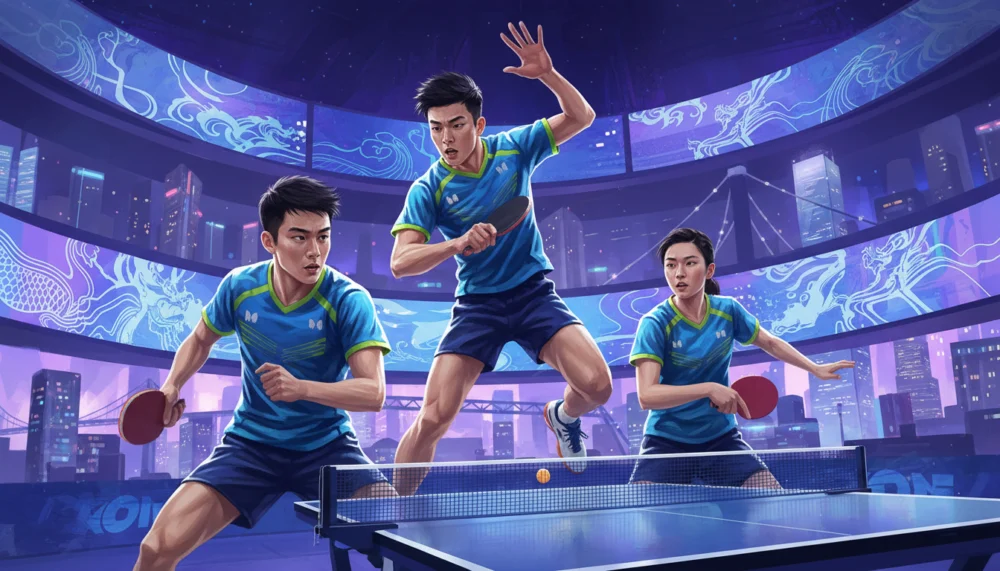
The landscape of international table tennis is undergoing a significant transformation, with Hong Kong emerging as a powerhouse of new talent. For decades, the city has been a respected name in the sport, but the recent surge of home-grown talent marks a new chapter in its sporting history. This evolution is characterized by a shift from reliance on veteran players to the empowerment of a vibrant, youthful core.
The Legacy of Excellence in Hong Kong Table Tennis
The success of Hong Kong in table tennis is not a recent phenomenon. The city has long been a hub for the sport, producing legendary figures who have competed at the highest levels. However, the current wave represents a fundamental change in how talent is identified and nurtured within the local ecosystem, moving toward a more sustainable and structured development model.
The Shift Toward Local Development
Unlike previous decades where the city often relied on recruited players to bolster its ranks, the current focus is on the Hong Kong Sports Institute (HKSI) and its ability to nurture local youngsters from a very early age. This home-grown approach has fostered a deep sense of pride and a unique playing style that is becoming recognizable on the international circuit.
Doo Hoi Kem: The Anchor of the Women’s Team
As a world-class competitor, Doo Hoi Kem has become the face of Hong Kong table tennis. Her leadership and consistent performance on the global stage have provided a foundation for the younger players to build upon. Her ability to remain calm under pressure serves as a blueprint for the rising stars who are now following in her footsteps.
The Rapid Ascent of Zhu Chengzhu
Among the most exciting prospects is Zhu Chengzhu, who has rapidly climbed the ITTF rankings. Her breakthrough performances in the World Table Tennis (WTT) series have proven her mettle against top-tier opponents. Zhu’s aggressive playstyle and tactical flexibility make her a formidable threat to any opponent she faces.
Revitalizing the Men’s Division
The men’s team is currently in a phase of rejuvenation, blending the experience of seasoned veterans with the raw energy of upcoming stars. This balance is crucial for maintaining competitiveness in a field dominated by giants like China and Japan. The focus has been on increasing the speed of play and improving transition times between offensive and defensive strokes.
Lam Siu Hang and the Next Generation
Players like Lam Siu Hang are at the forefront of this revitalization. His performance in international circuits has shown that Hong Kong’s men are capable of challenging the world’s best. The development of these athletes is supported by a robust system that prioritizes international exposure and high-intensity training camps.
Strategic Development at the Hong Kong Sports Institute
The Hong Kong Sports Institute provides a centralized environment where athletes can focus entirely on their craft. With support from international coaches and access to world-class facilities, the HKSI is the heartbeat of the city’s table tennis success. The integration of sports science has allowed for more personalized training regimens that cater to the specific needs of each athlete.
Grassroots Programs and Talent Scouting
The journey to the top begins long before these athletes reach the HKSI. Local programs are essential for identifying talent, including:
- Early exposure to international youth tournaments to build confidence
- Specialized physical conditioning tailored for table tennis movements
- Comprehensive mental toughness training programs to handle high-stakes environments
Technical Evolution in the Modern Game
The modern game of table tennis requires more than just skill; it requires extreme speed and power. Hong Kong’s new stars are adapting to this by refining their technical skills, particularly the backhand flick and high-speed counter-looping. This technical evolution is necessary to keep pace with the increasing tempo of international competition.
Mental Resilience and the Competitive Edge
Physical prowess is only half the battle. The mental aspect of the game is where many matches are won or lost. Hong Kong’s coaching staff places a heavy emphasis on psychological preparation, ensuring that players remain focused and resilient regardless of the scoreboard. This mental fortitude was on full display during recent Olympic and World Championship campaigns.
The Impact of International Success on Local Interest
Success breeds interest. The bronze medal win by the women’s team at the Tokyo Olympics served as a massive catalyst for the sport in Hong Kong. It inspired a new generation of children to pick up a paddle, ensuring that the pipeline of talent remains full for years to come. The visibility of these stars in local media has turned them into role models for aspiring athletes.
Balancing Academics and Elite Sport
One of the unique challenges in Hong Kong is the high value placed on education. The sports system has adapted by creating pathways that allow young stars to balance their rigorous training schedules with their academic pursuits. This holistic approach ensures that athletes are well-rounded individuals, which ultimately contributes to their performance on the court.
The Road Ahead: Future International Goals
With major events like the Asian Games and the upcoming Olympic cycles on the horizon, the focus remains on maintaining peak physical condition and tactical flexibility. The goal is not just to participate but to consistently reach the podium. The investment in youth is expected to pay dividends as these players enter their prime years.
Conclusion: A Sustainable Future for the Sport
The new wave of Hong Kong table tennis stars is not a temporary trend but the result of a deliberate, long-term investment in local talent and infrastructure. As these athletes continue to mature and gain experience, Hong Kong’s position as a global contender in table tennis is more secure than ever. The future of the sport in the city looks incredibly bright.