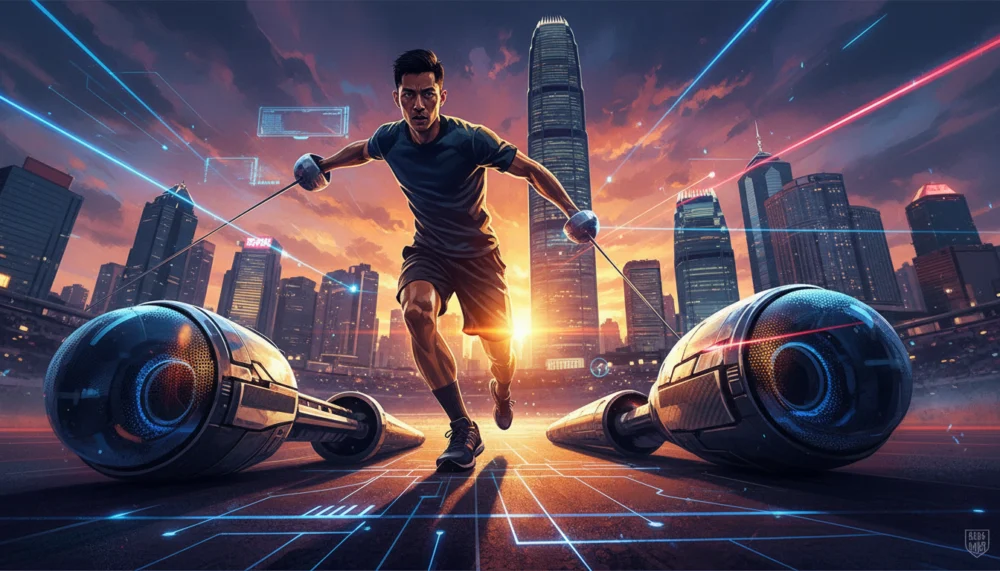
The landscape of professional sports in Hong Kong has undergone a seismic shift over the last decade. No longer is success merely a product of raw talent and grit; it is now equally a result of sophisticated engineering and technological integration. As global competition intensifies, the Hong Kong Sports Institute (HKSI) and various sporting bodies have turned to equipment innovation to give their athletes a competitive edge.
The Intersection of Technology and Talent
In the competitive arena of international sports, the difference between a gold medal and a fourth-place finish often comes down to milliseconds. Hong Kong athletes have increasingly leveraged equipment innovation to bridge this gap, utilizing everything from aerospace-grade materials to AI-driven performance analytics. This synergy between human potential and machine precision has redefined what is possible for the city’s sporting ambassadors.
Aerodynamics in Track Cycling
Perhaps no sport demonstrates the impact of equipment innovation more clearly than track cycling. Hong Kong’s cycling legend, Sarah Lee Wai-sze, benefited immensely from aerodynamic research conducted in collaboration with local universities. By utilizing wind tunnel testing and computational fluid dynamics, engineers were able to optimize her posture and the structural design of her bicycle.
The development of custom-made, ultra-lightweight carbon fiber frames specifically tailored to an athlete’s power output ensures that every watt of energy is converted into forward momentum. These innovations have been pivotal in maintaining Hong Kong’s status as a powerhouse in Asian and global cycling competitions.
Precision Engineering in Fencing
Fencing has seen a surge in popularity in Hong Kong, especially following Cheung Ka-long’s historic Olympic gold. Behind these achievements lies a significant investment in equipment science. Modern fencing blades are now crafted from maraging steel, which is more resistant to breaking and provides the necessary flexibility for high-speed maneuvers.
Furthermore, improvements in electronic scoring systems and wireless connectivity have allowed athletes to train with greater accuracy. High-speed cameras and sensor-laden gear provide real-time feedback on a fencer’s footwork and blade speed, allowing for micro-adjustments that were previously impossible to quantify.
Data-Driven Training and Wearables
Beyond the physical tools of the trade, wearable technology has revolutionized how Hong Kong athletes monitor their physiological state. Smart garments and biometric sensors track heart rate variability, oxygen saturation, and muscle fatigue in real-time, providing coaches with a comprehensive data set to prevent overtraining and injury.
- Real-time Biometrics: Monitoring vital signs to optimize recovery cycles.
- GPS Tracking: Analyzing movement patterns in field sports like rugby and football.
- Smart Textiles: Compression gear that enhances blood flow and reduces muscle oscillation.
Hydrodynamic Advancements in Swimming
In the pool, Siobhan Haughey’s record-breaking performances have been supported by the latest in textile engineering. Modern technical racing suits are designed to mimic the skin of apex marine predators, reducing drag and improving buoyancy. These suits use ultrasonic welding instead of traditional stitching to create a seamless surface that glides through the water.
The integration of specialized goggles with heads-up displays (HUD) has also started to emerge, allowing swimmers to see their lap times and stroke rates without breaking their form. This level of technical integration ensures that Hong Kong swimmers remain at the forefront of the international circuit.
Collaborative Innovation with Local Universities
A unique aspect of Hong Kong’s success is the collaboration between the sporting community and academic institutions like the Hong Kong Polytechnic University (PolyU) and the Hong Kong University of Science and Technology (HKUST). These partnerships have led to the creation of bespoke equipment that caters specifically to the ergonomic needs of local athletes.
For instance, specialized footwear designed using 3D printing technology allows for a perfect fit, reducing the risk of stress fractures and enhancing stability during explosive movements. This localized approach to innovation ensures that Hong Kong athletes are not just using the best gear available, but gear that is optimized for their unique physical profiles.
Psychological Edge from Reliable Gear
There is also a significant psychological component to equipment innovation. When an athlete knows they are equipped with the most advanced technology available, it fosters a sense of confidence and mental readiness. This ‘technological assurance’ allows athletes to focus entirely on their performance, knowing that their gear will not fail them under pressure.
The Future of Elite Performance in Hong Kong
As we look toward the future, the role of Artificial Intelligence (AI) and Virtual Reality (VR) in equipment design is set to expand. VR simulators are already being used to help athletes visualize courses and tracks before they even arrive at the venue, while AI algorithms are being used to predict equipment wear and tear.
The ongoing commitment to equipment innovation is not just about keeping pace with the world; it is about setting new standards. For Hong Kong athletes, the integration of cutting-edge technology remains a cornerstone of their journey toward the podium, ensuring that the city continues to punch above its weight on the global stage.