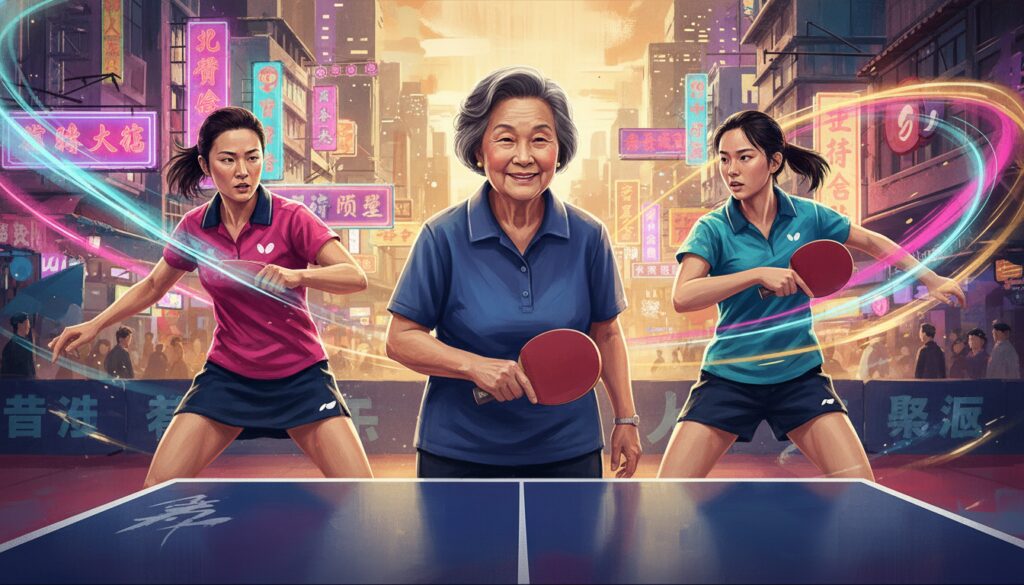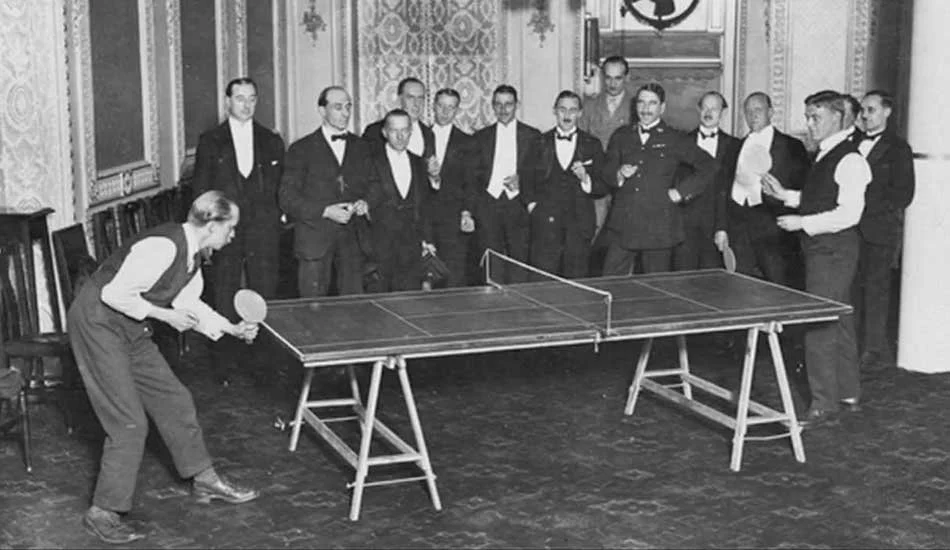
Hong Kong has long been a significant player on the international table tennis stage, boasting a rich history that mirrors the global evolution of the sport. From local community centers to the Olympic podium, the technical landscape of the game in the city has undergone a profound transformation over the decades, influenced by global trends and regional expertise.
The Traditional Era: Penhold Dominance
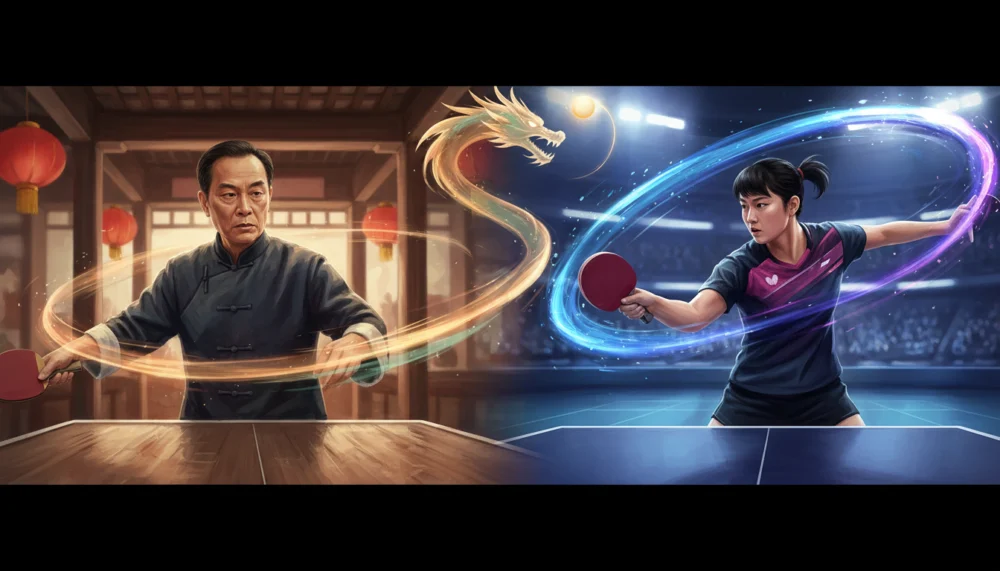
In the mid-20th century, the penhold grip was the undisputed standard for players in Hong Kong. This style, characterized by holding the racket like a pen, allowed for incredible wrist flexibility and a devastating forehand-oriented attack. Most players focused on speed and proximity to the table, aiming to finish points quickly before the opponent could react.
The Influence of Short-Pips Fast Attack
During this era, many Hong Kong athletes utilized short-pips rubber on their forehands. This setup was designed for ‘hitting’ rather than ‘looping,’ emphasizing a flat, fast trajectory. The tactical goal was to stay close to the table and use the opponent’s power against them, a style that required lightning-fast reflexes and exceptional footwork.
The Transition to the Shakehand Grip
As the sport moved into the 1980s and 1990s, the global dominance of European players like Jan-Ove Waldner brought the shakehand grip into the spotlight. Hong Kong coaches and players began to realize that the shakehand grip offered better reach and a more natural backhand stroke, which was becoming essential as the game slowed down slightly with equipment changes.
The Rise of the Two-Winged Looper
The transition saw a shift from flat hitting to ‘looping’—a technique that uses heavy topspin to control the ball’s trajectory. This allowed players to attack from both the forehand and backhand sides with equal ferocity. The ‘two-winged looper’ became the new archetype for success in the Hong Kong national team programs.
The Impact of Mainland Chinese Coaching
One cannot discuss Hong Kong table tennis without acknowledging the influence of Mainland China. Many top-tier coaches moved to the city, bringing with them the rigorous training methodologies and tactical innovations developed in the Chinese national system. This professionalization helped Hong Kong athletes refine their technical skills and mental toughness.
Technical Precision and Footwork
Under this influence, Hong Kong players began to prioritize technical precision. Training sessions focused heavily on:
- Multiball drills to improve reaction speed
- Specific footwork patterns for lateral movement
- Service and receive tactics to gain early advantages
Notable Players Who Defined Eras
The evolution of style is best seen through the city’s legendary athletes. The ‘Twin Towers’ of Hong Kong table tennis, Li Ching and Ko Lai Chak, famously won the silver medal in men’s doubles at the 2004 Athens Olympics. Their style combined traditional quickness with modern tactical placement, proving that Hong Kong could compete at the highest level.
The Modern Penhold Innovation: Wong Chun Ting
In a world dominated by shakehand players, Hong Kong’s Wong Chun Ting emerged as a global star by revitalizing the penhold grip. He utilizes the ‘Reverse Penhold Backhand’ (RPB), a technique that allows penholders to use the back side of the racket for topspin drives, effectively eliminating the traditional backhand weakness of the grip.
Adapting to Equipment and Rule Changes
The evolution of playing styles has also been a reaction to changes in the sport’s regulations. The shift from 38mm to 40mm balls, and later to the 40mm+ plastic (poly) ball, reduced the amount of spin and speed. This forced Hong Kong players to focus more on raw power and physical conditioning.
The Modern Power Game
Today’s elite Hong Kong players are more athletic than ever. The modern style requires:
- Explosive core strength for high-speed loops
- High-tension rubbers and composite blades
- Aggressive backhand ‘flicks’ over the table
The Role of the Hong Kong Sports Institute
The Hong Kong Sports Institute (HKSI) has played a pivotal role in nurturing these evolving styles. By providing world-class facilities and sports science support, the HKSI ensures that junior players are taught the most modern techniques from a young age, blending traditional speed with contemporary power.
Future Trends in Hong Kong Table Tennis
Looking ahead, the style in Hong Kong is likely to become even more aggressive. With the increasing speed of the game, players are focusing on shortening their swing motions and taking the ball at the highest point of the bounce. Tactical variety, including deceptive serves and varied spin, remains a hallmark of the city’s approach to the game.
In conclusion, the evolution of playing styles in Hong Kong table tennis is a testament to the city’s adaptability and passion for the sport. By bridging the gap between traditional penhold techniques and modern shakehand power, Hong Kong continues to produce world-class talent capable of challenging the very best on the international circuit.