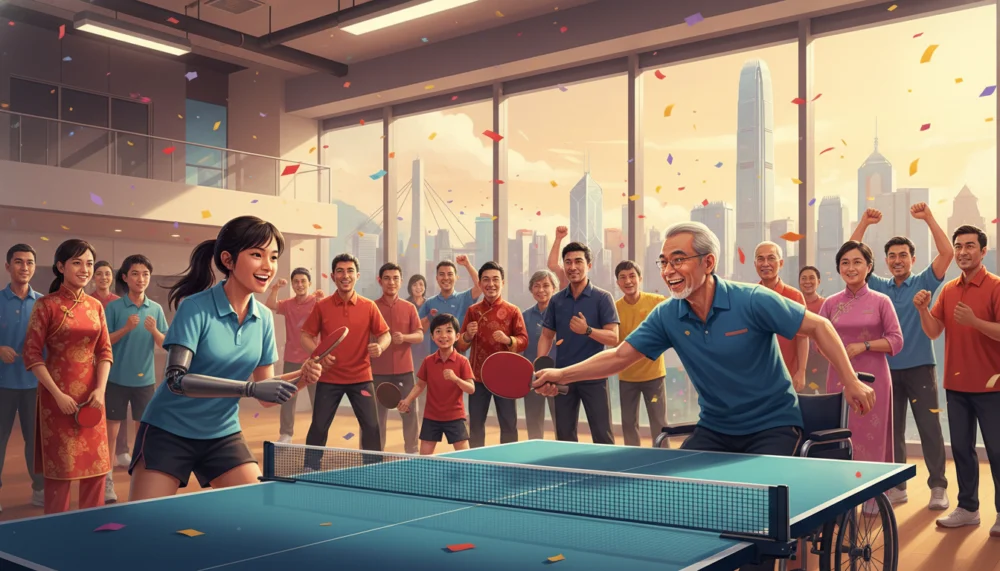
Table tennis has long been a cornerstone of Hong Kong’s sporting culture, serving as a bridge between generations and social classes. In recent years, the city has seen a significant shift toward inclusivity, with new programs designed to bring competitive pingpong to individuals who were previously marginalized in the sporting world.
The Growth of Inclusive Competitive Frameworks
The landscape of competitive table tennis in Hong Kong is evolving to accommodate a broader range of participants. Organizations are moving beyond simple recreational play, establishing structured pathways that allow athletes of all physical and cognitive abilities to compete at high levels. This shift is not just about participation; it is about excellence and the recognition of talent in all its forms.
Para-Table Tennis Integration
One of the most successful aspects of this movement is the integration of para-table tennis into mainstream training centers. The Hong Kong Sports Association for the Physically Disabled has been instrumental in this regard, providing professional-grade coaching and facilities. By training alongside able-bodied athletes, para-athletes benefit from a more rigorous competitive environment, which has led to impressive results on the international stage.
Key Initiatives Driving Participation
Several key initiatives have been launched to ensure that financial or physical barriers do not prevent talented individuals from pursuing competitive pingpong. These programs often focus on grassroots development, identifying talent in schools and community centers across the territory.
- Subsidized Coaching Schemes: Reducing the cost of professional training for low-income families.
- Accessible Facility Upgrades: Ensuring that sports centers are equipped with ramps, specialized flooring, and accessible restrooms.
- Adaptive Equipment Grants: Providing specialized rackets and mobility aids for athletes with specific physical needs.
Expanding Youth Talent Pipelines
The Hong Kong Table Tennis Association has expanded its youth development programs to include more inclusive categories. By introducing competitive brackets for different skill levels and physical requirements at a young age, the city is ensuring a steady stream of diverse talent. These programs emphasize sportsmanship and resilience, qualities that are vital for any competitive athlete.
Technological Advancements in Adaptive Training
Technology is playing a pivotal role in making competitive pingpong more accessible. Modern training methods now incorporate motion-tracking software and virtual reality to help athletes with mobility issues refine their techniques. These tools allow coaches to provide data-driven feedback that is tailored to the specific physical capabilities of each player.
The Role of AI in Skill Assessment
Artificial Intelligence is also being used to analyze the playstyles of diverse athletes. By identifying patterns in movement and reaction times, AI can suggest personalized training regimens that maximize an athlete’s strengths while minimizing the impact of physical limitations. This high-tech approach is leveling the playing field in ways previously thought impossible.
Psychological and Social Benefits of Inclusion
Beyond the physical competition, inclusive pingpong programs offer immense psychological benefits. Engaging in high-stakes sports fosters a sense of belonging and boosts self-esteem. For many participants, the competitive arena is a place where their abilities are the focus, rather than their disabilities.
Building Community Through Competition
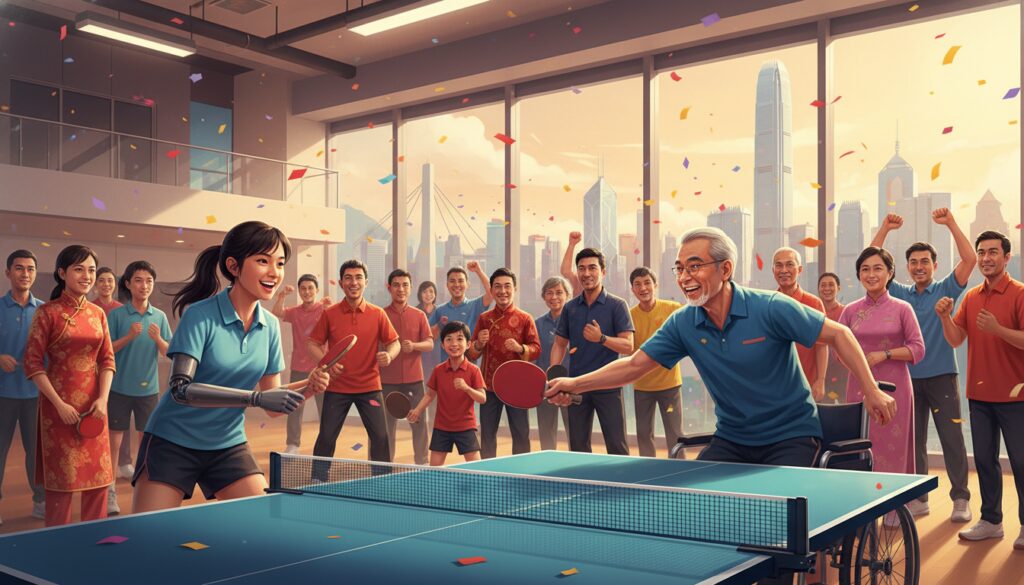
Competitive tournaments act as a focal point for the community, bringing together families, coaches, and fans from all walks of life. These events promote social cohesion and challenge societal stereotypes regarding what individuals with disabilities or from disadvantaged backgrounds can achieve. The atmosphere at these tournaments is one of mutual respect and shared passion for the sport.
Infrastructure and Accessibility Improvements
The Hong Kong government has committed significant resources to upgrading public sports facilities to meet international accessibility standards. This includes the installation of tactile paving for the visually impaired and the redesign of spectator areas to accommodate wheelchair users. Such improvements ensure that everyone can enjoy the thrill of live competitive pingpong.
Strategic Policy Support
Policy changes at the municipal level have prioritized the development of inclusive sports hubs. These hubs serve as centers of excellence where athletes of all backgrounds can access world-class training. The government’s support provides the necessary stability for these programs to thrive in the long term.
Future Outlook for Hong Kong Pingpong
The future of competitive pingpong in Hong Kong looks bright, with inclusivity at its core. As more programs are established and existing ones expand, the city is set to become a global leader in inclusive sports. The success of these initiatives serves as a model for other sports and other cities around the world.
International Collaborations
Hong Kong is increasingly collaborating with international sporting bodies to host inclusive tournaments. These events not only showcase local talent but also facilitate the exchange of best practices in adaptive coaching and sports management. By participating in a global network, Hong Kong ensures its programs remain at the cutting edge of the industry.
Conclusion
The expansion of inclusive programs in Hong Kong is more than just a trend; it is a fundamental shift in how the city views competitive sports. By removing barriers and fostering a culture of excellence for all, Hong Kong is ensuring that the game of pingpong remains a vibrant and essential part of its cultural fabric for years to come.