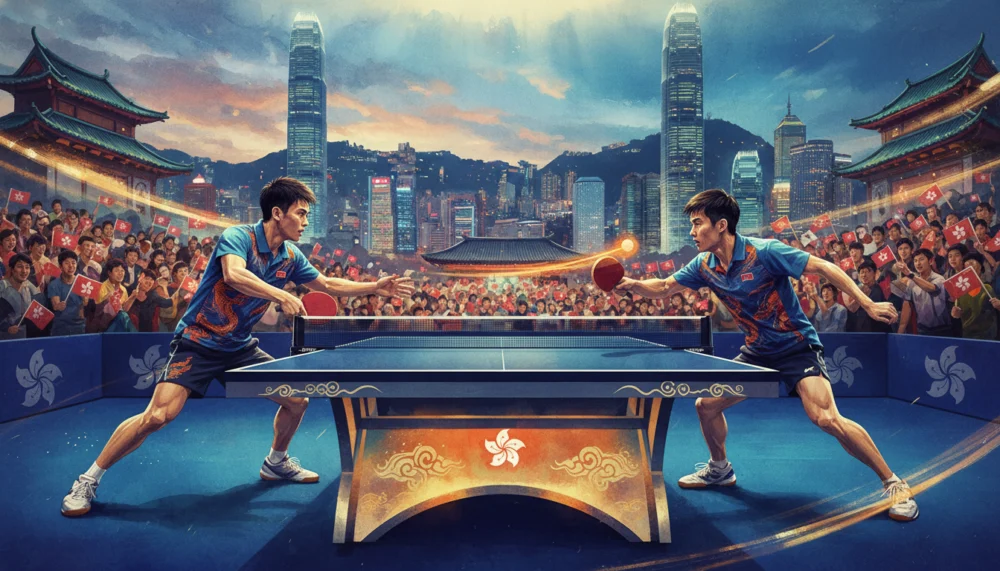
The rise of Hong Kong as a powerhouse in the world of table tennis is no accident. It is the result of a meticulously crafted ecosystem supported by the Hong Kong Special Administrative Region (HKSAR) government. Through strategic funding, infrastructure development, and talent identification programs, the sport has transitioned from a popular pastime to a professional discipline capable of producing Olympic medalists.
The Evolution of Government Involvement
For decades, the government has recognized the potential of table tennis as a sport where Hong Kong athletes can excel on the global stage. The involvement began with basic facility management but has since evolved into a comprehensive support system that covers every aspect of an athlete’s career, from early childhood interest to post-retirement transitions.
The primary vehicle for this support is the Leisure and Cultural Services Department (LCSD) and the Hong Kong Sports Institute (HKSI). These organizations work in tandem to ensure that the sport receives the necessary resources to remain competitive in an increasingly professionalized international landscape.
The Role of the Hong Kong Sports Institute (HKSI)
The HKSI serves as the elite training hub for table tennis players. As a Tier A elite sport, table tennis receives the highest level of funding and support. This includes state-of-the-art training halls, specialized sports medicine, and scientific research aimed at optimizing player performance.
Athletes at the HKSI benefit from a structured environment where they can focus entirely on their craft. The government provides Elite Training Grants, which offer financial stability to full-time athletes, allowing them to pursue their sporting dreams without the immediate pressure of traditional employment.
Infrastructure and Accessibility
One of the most significant impacts of government support is the widespread availability of high-quality facilities. The LCSD manages hundreds of indoor sports centers across the territory, most of which are equipped with professional-grade table tennis tables.
- Affordable booking rates for the general public.
- Dedicated training zones for district squads.
- Hosting of local and international tournaments.
- Modernized ventilation and lighting systems tailored for the sport.
Strategic Funding and Development Programs
Beyond physical infrastructure, the government invests heavily in development programs. The ‘New Generation’ Table Tennis Training Course and various school-based initiatives are designed to identify young talent at an early age. These programs are often subsidized, ensuring that financial barriers do not prevent gifted children from entering the sport.
The Sports Aid Grant and the Individual Athletes Support Scheme further ensure that even those not yet at the elite level have the resources to compete in regional competitions, gaining the experience necessary to move up the ranks.
Success on the Global Stage
The effectiveness of these government policies was most visible during the Tokyo 2020 Olympics, where the Hong Kong women’s team secured a historic bronze medal. This achievement was not just a victory for the players but a validation of the long-term investment strategies employed by the government.
The funding allows for the recruitment of world-class coaching staff, many of whom are former champions from Mainland China. This exchange of expertise is a direct result of government-to-government cooperation and specialized sports funding aimed at bringing the best technical knowledge to Hong Kong.
Coaching and Professional Expertise
Government support facilitates the hiring of a multi-disciplinary team for the table tennis squad. This team includes:
- Technical coaches focusing on stroke mechanics.
- Physical trainers for agility and endurance.
- Sports psychologists for mental resilience.
- Nutritionists for optimal recovery.
Boosting Public Interest and Participation
When the government invests in elite success, it creates a ‘trickle-down’ effect that boosts public interest. The visibility of successful athletes in the media, supported by government-funded promotional campaigns, encourages more parents to enroll their children in table tennis academies.
This increased participation creates a larger pool of talent for the national team to draw from. The government also supports the Hong Kong Table Tennis Association (HKTTA) in organizing community events and ‘Sport for All’ days, making the sport a core part of the city’s cultural identity.
Challenges and Future Prospects
Despite the successes, the government continues to adapt its strategies to meet new challenges. The increasing competitiveness of other Asian nations means that Hong Kong must constantly innovate. Future plans include the expansion of the HKSI campus and the integration of Artificial Intelligence (AI) in performance analysis.
The government is also focusing on the dual-career development of athletes. By partnering with universities, they ensure that table tennis players can pursue higher education while training, addressing the long-term concerns of career security after retirement.
In conclusion, the impact of government support on Hong Kong table tennis is profound and multifaceted. By providing a stable financial foundation, world-class facilities, and a clear pathway for talent, the government has ensured that Hong Kong remains a formidable force in the international table tennis arena for years to come.