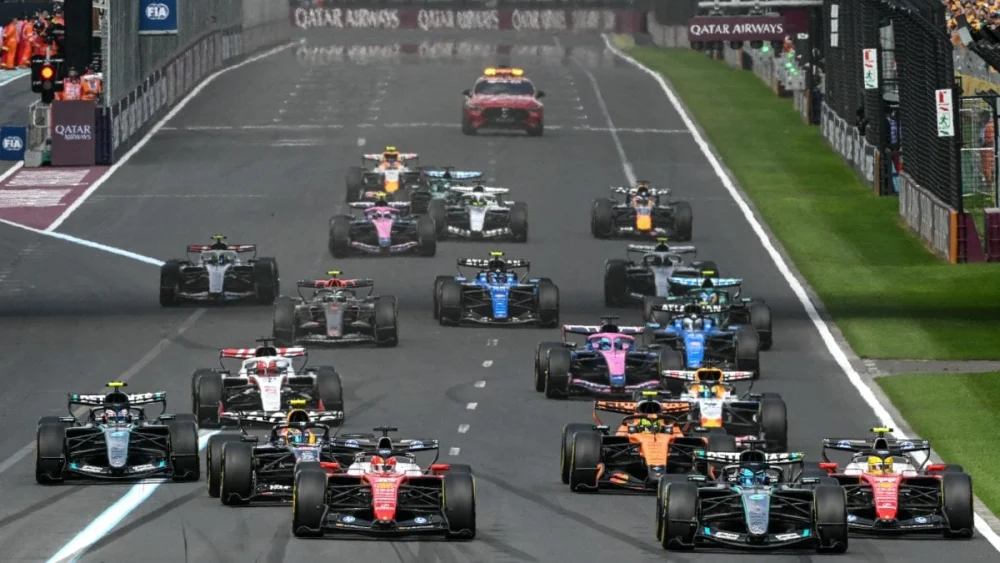
The dawn of the 2026 Formula 1 season, marked by the Australian Grand Prix at the iconic Albert Park Circuit, was not solely defined by the thunderous roar of new hybrid powertrains or the intricate dance of aerodynamics. Instead, the season’s inaugural race start was unexpectedly marred by a perplexing technicality within the newly implemented regulations, transforming what should be a precisely orchestrated ballet of machinery into a potentially chaotic spectacle. This unexpected complication stemmed from an obscure energy-recharge rule, ingeniously designed to manage the deployment of hybrid power, but which inadvertently created a significant disadvantage for drivers, particularly those starting at the front of the grid. The implications of this regulatory oversight have sent ripples through the paddock, prompting urgent discussions about potential recalibrations before the confusion escalates into genuine performance inequity.
The Genesis of the Grid’s Glitch: A Formation Lap Conundrum
The core of the issue lies in a seemingly innocuous amendment to the energy management protocols for the 2026 season. Under the revised regulations, each Formula 1 car is subject to a finite energy recharge limit per lap. This limit, dynamically adjusted based on the specific demands and characteristics of each circuit, aims to ensure a balanced and strategic deployment of the potent hybrid power units. However, the critical oversight emerged in how this recharge limit was monitored. The system, designed to track energy harvesting and deployment, registers every instance a car crosses a designated timing line, and crucially, this includes the formation lap.
This seemingly minor detail had profound consequences for the pre-race rituals that have become ingrained in the fabric of Formula 1. Drivers, as a standard practice, utilize the formation lap to meticulously prepare their machinery for the intense demands of a race start. This involves aggressive acceleration to bring the tires up to optimal operating temperatures and sharp braking to generate heat and ensure optimal grip. These actions, however, are intrinsically linked to the energy management system. Accelerating hard, especially when deploying stored electrical energy, and subsequently braking, which initiates energy harvesting, directly impacts the car’s energy balance.
The conundrum presented itself with stark clarity in Melbourne. Drivers who engaged in their usual preparation, pushing the boundaries of acceleration and braking to ensure their tires were primed and their engines were singing, inadvertently began to deplete their available energy recharge capacity even before the starting lights illuminated. The formation lap, intended as a controlled build-up to the race, transformed into a delicate balancing act. Pushing too hard risked exceeding the energy recharge limit, leaving drivers with depleted batteries and a significant disadvantage from the outset. Conversely, a conservative approach meant the risk of heading into the first corner with tires that were not at their peak operating temperature, compromising grip and potentially leading to costly errors or a compromised race start. This delicate tightrope walk, dictated by the timing line’s unforgiving tally, rendered the race start a precarious gamble.
The Pole Position Paradox: An Unintended Disadvantage
The impact of this energy recharge rule was not uniformly distributed across the grid; rather, it created a peculiar and significant disadvantage for those occupying the coveted front-row starting positions. This became acutely evident with George Russell, the pole-sitter for the Australian Grand Prix. While starting at the front is universally desired, Russell’s track position placed him in an unfortunate proximity to the critical timing line.
The formation lap typically involves a brief burnout or "donut" maneuver performed by the leading cars, a tradition designed to heat the tires and create a visual spectacle. For Russell, positioned at the very front, this burnout and the subsequent acceleration across the timing line to begin the formation lap itself, consumed a portion of his available energy recharge capacity. Because he was the first to cross the line and initiate the full formation lap sequence, his energy counter began ticking down immediately.
In stark contrast, drivers positioned further back on the grid experienced a different sequence of events. They had the opportunity to perform their tire-warming maneuvers and accelerate across the timing line at a later stage of the formation lap. This effectively allowed them to "reset" their energy recharge counter or at least delay its activation. By the time they reached the grid and the race began, drivers further back could potentially have a more optimal energy balance compared to those at the front who had already expended some of their allowance simply by being at the forefront of the pack.
The consequence of this timing-line anomaly was a grid of cars in wildly divergent states of readiness. Some drivers, like Russell, found themselves with significantly depleted batteries, impacting their ability to deploy full power at the crucial start. Others, while perhaps having a better energy balance, were grappling with tires that had not reached their optimal operating temperature due to a more conservative formation lap. A select few may have even found themselves missing the optimal "turbo window" – the brief period when the hybrid system delivers peak performance – due to miscalculations or unforeseen energy depletion. This disparity in pre-race preparation, dictated by grid position and the timing line’s unforgiving arithmetic, painted a picture of a start procedure that was far from the level playing field Formula 1 strives to maintain.
A Deeper Dive into the 2026 Regulations and Their Context
The introduction of the 2026 Formula 1 regulations marks a significant evolution in the sport’s technological landscape. A cornerstone of these changes is the recalibrated hybrid power units, which now distribute power roughly 50-50 between the internal combustion engine and the electric battery. This strategic shift aims to enhance the importance of energy management throughout a race, rewarding drivers and teams who can optimize their deployment and harvesting strategies. The goal is to create more tactical racing, where the intelligent use of hybrid power becomes as crucial as raw speed.
The formation lap, while seemingly a minor preamble, plays a vital role in this new paradigm. It’s not merely a procession; it’s the final opportunity for teams to fine-tune their car’s setup and for drivers to gauge track conditions before the all-out assault of the race begins. The energy recharge rule, in theory, is designed to prevent teams from "gaming" the system by excessively harvesting energy during the formation lap, thereby gaining an unfair advantage at the start. However, the implementation of this rule, specifically its interaction with the timing line, appears to have missed a crucial nuance in the practical execution of pre-race procedures.
Reactions from the Paddock: Whispers of Concern and Calls for Clarity
While official statements from the FIA and individual teams are likely to be measured and diplomatic, the sentiment within the paddock has been one of palpable concern and a strong desire for swift clarification. Sources close to several leading teams have indicated that engineers were caught off guard by the extent of the issue. The intricate calculations for energy management, typically refined over extensive testing and simulations, were apparently not fully accounting for the precise impact of the timing line’s interaction with the formation lap’s energetic demands.
"It’s a new era, and there are always going to be some teething problems with new regulations," commented one anonymous senior engineer from a midfield team. "However, this particular issue with the formation lap energy recharge is more significant than a minor niggle. It directly impacts the fairness of the race start, and that’s something we need to address quickly."
There is an expectation that the FIA’s technical department will be inundated with queries and requests for clarification from teams. The governing body, under pressure to ensure the integrity and spectacle of the new regulations, is likely to be reviewing the incident and considering potential adjustments. The speed at which this issue is resolved will be critical in preventing it from becoming a recurring point of contention throughout the season.
Broader Implications: The Specter of Inequity and the Quest for a Solution
The chaotic start at Albert Park serves as a stark reminder that even the most meticulously crafted regulations can harbor unintended consequences. The implications of this energy recharge rule extend beyond a single race start; they touch upon the very principles of fair competition and strategic parity.
Firstly, the potential for performance disparity based on grid position is a significant concern. Formula 1 prides itself on being a meritocracy, where success is earned through a combination of driver skill, engineering prowess, and strategic acumen. If a technicality in the regulations can inherently disadvantage drivers based solely on where they qualify, it undermines this fundamental tenet.
Secondly, the unpredictability introduced into the race start could, if left unaddressed, lead to a perception of randomness rather than calculated performance. While a degree of unpredictability is welcomed in motorsport, a situation where the outcome of the initial few seconds of a race is heavily influenced by an obscure rule interpretation is unlikely to satisfy fans or stakeholders.
The FIA faces a critical juncture. The immediate priority will be to analyze the data from the Australian Grand Prix and consult with teams to understand the full scope of the problem. Potential solutions could range from a minor recalibration of the energy recharge limits specifically for the formation lap, to a complete re-evaluation of how the timing line interacts with energy management protocols during this phase of the race. The objective will be to reinstate a predictable and equitable race start procedure that allows drivers to focus on their performance rather than the intricate workings of a complex energy management system.
The 2026 Formula 1 season has undoubtedly begun with a bang, albeit one tinged with unexpected regulatory friction. The challenge now lies in how swiftly and effectively the sport’s governing bodies can address this formation lap anomaly, ensuring that the future of Formula 1 is built on a foundation of thrilling competition, not the confusing intricacies of its own rulebook. The specter of chaotic race starts looms, but with prompt action and collaborative problem-solving, Formula 1 can steer itself back towards the seamless spectacle it aims to deliver.