The landscape of athletic training is continually evolving, driven by technological advancements that promise greater efficiency, personalization, and accessibility. In the realm of table tennis, a sport demanding precision, speed, and strategic acumen, the Power Pong robot has emerged as a groundbreaking innovation, redefining how players of all levels approach practice and skill development. Far from a simplistic ball feeder, the Power Pong system integrates sophisticated robotics with intuitive mobile application control, creating a dynamic training partner that has garnered enthusiastic praise from a diverse user base, ranging from aspiring professionals to individuals seeking engaging rehabilitation and cardio workouts.
The Evolution of Table Tennis Training Robotics
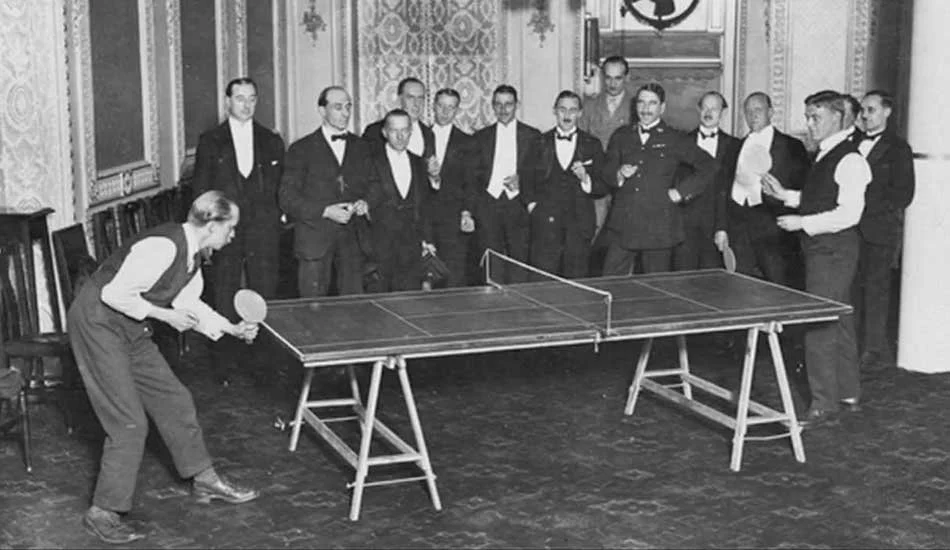
For decades, table tennis players have utilized robotic partners to enhance their skills. Early models, often rudimentary, primarily served to deliver balls at consistent speeds and trajectories, allowing players to practice repetitive strokes. While beneficial for basic muscle memory and rhythm, these machines lacked the variability and intelligence required to simulate real-game scenarios or adapt to a player’s evolving needs. The limitations included fixed programming, laborious manual adjustments, and an inability to replicate the nuanced spins and unpredictable placements characteristic of competitive play.
The advent of smart technology, particularly in mobile computing and artificial intelligence, has paved the way for a new generation of sports robotics. Power Pong stands at the forefront of this revolution. Its development reflects a broader trend across various sports where data analytics, connectivity, and personalized algorithms are being harnessed to optimize performance. The chronological progression from mechanical feeders to intelligent, app-controlled systems marks a significant paradigm shift, offering athletes unprecedented control over their training environments. This technological leap allows for the simulation of complex match situations, enabling players to refine not just their physical technique but also their tactical thinking and reaction times in a controlled, repeatable manner.
Core Features Driving Unparalleled User Satisfaction
The enthusiastic feedback from Power Pong users consistently highlights several key features that set the robot apart. Central to its appeal is the intuitive mobile application control. Users like Ron, a satisfied Power Pong user, exclaim, "The Power Pong robot is a BEAST! All the control that you need can be used through your phone. Every spin and drill imaginable can be programmed with ease." This sentiment is echoed by Tom, a Power Pong Omega user, who praises the app, stating, "I love this app. It makes programming routines a snap. Very impressive and the interface is extremely intuitive." The seamless integration with smartphones eliminates cumbersome physical controls, allowing for quick adjustments and complex program creation directly from a familiar device. This user-centric design minimizes the learning curve and maximizes training time.
Beyond ease of use, the Power Pong robot offers unparalleled drill customization. Traditional robots struggled to vary ball characteristics within a single drill. Power Pong, however, excels in this area. Sergiy, a satisfied user, notes its hard-to-underestimate features, including "different spins, placements, trajectories, and speeds in the same drill." Javcolin, a verified customer, confirms, "Does everything as advertised, with quality. The app is easy to use and very intuitive and user friendly; you can change any exercise with ball placement, trajectory, and spin." This level of granularity allows players to practice specific weaknesses, such as "backhand openings" as mentioned by Caleb, or even experiment with "no spin" balls, which are notoriously difficult to return. Ayush further emphasizes this versatility, appreciating "how the machine has many different settings to give me such a versatile training session. Being able to adjust the robot to fit my needs is why I love this robot so much!" This adaptive capability transforms the robot from a mere practice tool into a highly responsive, personalized coaching assistant.
Versatility Beyond the Training Hall: Health and Rehabilitation
One of the most compelling aspects highlighted by user testimonials is the Power Pong robot’s utility beyond traditional table tennis training. Tom, for instance, identifies its significant potential in health and wellness, stating, "I use the robot for both training and as a cardio workout device. This unit should be in rehab centers everywhere. It takes the boredom out of cardio workouts and keeps the mind occupied, the time flies. Great work!" This perspective underscores the robot’s capacity to serve a broader demographic, including individuals recovering from injuries or those simply seeking an engaging form of exercise.
Table tennis itself is recognized for its numerous health benefits, including improved hand-eye coordination, reflexes, balance, and cognitive function. The controlled environment offered by the Power Pong robot allows these benefits to be harnessed safely and effectively. For rehabilitation, the ability to precisely control ball speed, placement, and spin enables therapists to tailor exercises to individual patient needs, gradually increasing complexity as recovery progresses. The mental engagement required to track and return balls also offers a significant advantage over monotonous cardio routines, making physical activity more enjoyable and sustainable. This dual functionality positions Power Pong not just as a sports training device but as a valuable tool for public health initiatives and therapeutic practices.
The Indispensable Role of Customer Service
For a high-value, technologically advanced product, robust customer support is paramount. Several testimonials specifically commend the assistance provided. Vicky, a satisfied Power Pong user, unequivocally states, "The customer service provided by Coach Attila is excellent. I will highly recommend Power Pong!" Similarly, Joe expresses gratitude, "I want to thank you so much for all you help with everything. My little boy is using it and he loves it. It’s a great machine and I’m not going to hesitate to recommend it to anyone!" This consistent recognition of exceptional service, particularly mentioning a specific individual, Coach Attila, suggests a company culture that prioritizes user experience beyond the initial purchase. In a market where technical complexities can be a barrier, readily available and expert support can significantly enhance user satisfaction and product longevity.
Market Positioning and Value Proposition
While the testimonials unanimously praise the robot’s capabilities, some users acknowledge its premium price point. Sergiy, for example, comments, "This robot might be on the expensive side but it is hard to underestimate all the features it has." Javcolin offers a resounding endorsement of its value, asserting, "Best practice robot, not cheap but worth every single penny." This perspective positions the Power Pong robot as a significant investment, but one that delivers commensurate returns in terms of training quality, versatility, and durability.
To contextualize this, consider the cost of regular private coaching, which can accumulate rapidly. A high-quality robot like Power Pong offers unlimited, on-demand practice sessions without the recurring fees of a coach. It provides a consistent, unbiased training partner that can execute drills with perfect repetition, something even the best human coaches cannot achieve. From an economic standpoint, for dedicated players or institutions, the initial outlay for a Power Pong robot can be viewed as a cost-effective, long-term solution for continuous skill development. Industry analysis suggests a growing willingness among consumers in specialized sports markets to invest in high-performance equipment that offers tangible advantages, and Power Pong appears to fit this trend perfectly. The global market for sports robotics, though nascent, is projected to expand significantly, driven by demand for personalized training solutions and performance optimization tools.
Broader Impact and Future Implications
The emergence of products like the Power Pong robot has several profound implications for the sport of table tennis and sports technology at large. Firstly, it democratizes high-level training. Previously, access to sophisticated training methods, varied opponents, and personalized drills was often limited by geography, cost, or the availability of skilled partners. A Power Pong robot brings an elite training environment directly to a player’s home or club, breaking down traditional barriers. This accessibility can foster greater participation and accelerate skill development across a wider demographic, potentially nurturing new talent.
Secondly, it exemplifies the ongoing innovation in sports technology. Power Pong’s success showcases how integrating mobile technology, advanced robotics, and user-centric design can create truly transformative products. This model may inspire similar innovations in other individual sports, pushing the boundaries of what automated training partners can achieve. The ability to program complex sequences, mimic different player styles (hypothetically, in future iterations), and provide instant feedback could become standard features in advanced sports equipment.
Finally, its demonstrated utility in health and wellness opens up new markets and applications. As global populations age and the focus on preventive health grows, engaging and effective tools for physical and cognitive exercise will be increasingly sought after. Power Pong’s capacity to transform monotonous workouts into mentally stimulating activities positions it as a potential leader in the burgeoning market for active lifestyle technologies, bridging the gap between sports performance and general well-being. The positive experiences shared by users, from children learning the game to adults maintaining fitness, underscore its broad appeal and lasting impact.
In conclusion, the Power Pong robot represents more than just a sophisticated piece of sports equipment; it is a testament to how intelligent design, advanced engineering, and a deep understanding of user needs can converge to create a product that not only meets but exceeds expectations. Through its intuitive app control, unparalleled drill customization, versatile applications for training and health, and robust customer support, Power Pong has firmly established itself as a transformative force in table tennis, earning widespread acclaim and setting a new benchmark for robotic training partners in sports. Its impact is likely to resonate for years to come, shaping how players train, how coaches instruct, and how individuals engage with physical activity.