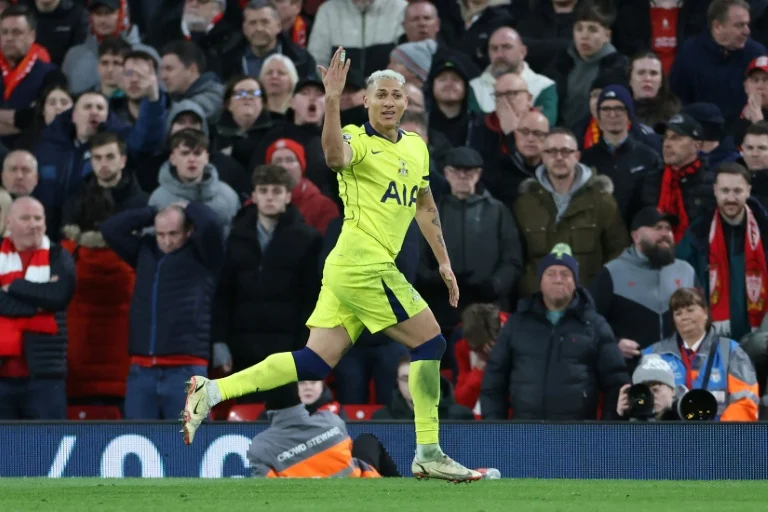
The pursuit of peak performance, whether on the athletic field or within the corporate boardroom, is increasingly being defined not by physical or technical prowess alone, but by the cognitive ability to maintain focus amidst escalating environmental pressures. Recent developments in performance psychology suggest that the capacity to "get the mind right" is the primary differentiator between average output and elite execution. Central to this mental state is the concept of focus, a cognitive resource that requires the deliberate elimination of internal and external interference. According to experts in human behavior, focus is not merely a passive state of attention but an active exclusion of discursive thoughts, specifically fear and distraction, which serve as the primary impediments to optimal performance.
The Cognitive Mechanics of Focus and the Impact of Distractions
In the modern high-stakes environment, the ability to achieve a quieted mind has become a rare commodity. Cognitive scientists define this state as the absence of "noise"—the intrusive thoughts that divert mental energy away from the task at hand. Fear, particularly the fear of failure or social judgment, triggers the brain’s amygdala, which can effectively hijack the prefrontal cortex, the area responsible for complex decision-making and concentrated focus. When an individual is preoccupied with potential negative outcomes, their cognitive load increases, leaving fewer resources for the execution of their specific role.
Distractions, while often more mundane than fear, are equally detrimental. In a corporate setting, the "cost of switching" tasks is a well-documented phenomenon. Research from the University of California, Irvine, indicates that it takes an average of 23 minutes and 15 seconds to return to the original task after an interruption. For an elite athlete, a distraction of even a fraction of a second can result in a missed opportunity or a physical error. Therefore, the elimination of these factors is not merely a preference but a prerequisite for what psychologists call "Flow"—a state of effortless concentration and peak performance.
The Foundation of Confidence: Preparation and the Pursuit of Truth
The transition from a distracted state to one of focus is facilitated by confidence, which serves as the psychological floor for high-level execution. This confidence is not an ephemeral feeling but a structured outcome of rigorous preparation. In professional sports and high-level business operations, confidence is built through the iterative process of training and practice. By repeatedly engaging in simulated high-pressure scenarios, individuals gain an empirical awareness of their own abilities.
This process is deeply rooted in what performance coaches describe as "knowing the truth." This refers to a factual assessment of one’s skills and limitations. When an individual operates from a place of truth—grounded in data-backed preparation—they are less susceptible to the fluctuations of emotion. A quarterback who has studied film for 40 hours or a CEO who has scrutinized every line of a merger agreement operates from a position of certainty. This certainty removes the "what if" scenarios that generate fear, thereby clearing the path for absolute focus on the present moment.
The Role of Trust and Psychological Safety in Team Dynamics
While confidence is an individual attribute, focus within a group setting is heavily dependent on trust. In the context of a team, trust is the belief that one’s colleagues or teammates will fulfill their specific responsibilities. When this trust is present, an individual is freed from the burden of monitoring others’ performances, allowing them to dedicate 100% of their cognitive resources to their own role.
This concept aligns with the "Psychological Safety" framework popularized by Harvard Business School professor Amy Edmondson and later validated by Google’s "Project Aristotle." Google’s multi-year study into team effectiveness found that trust and psychological safety were the most significant predictors of success. When team members trust one another, the collective "mind" of the group is righted. There is no need for defensive posturing or second-guessing, which are forms of mental distraction. In an environment of trust, focus flourishes because the threat of interpersonal conflict or systemic failure is mitigated.
A Chronology of Performance Psychology: From Theory to Application
The evolution of these concepts can be traced through a timeline of psychological and organizational milestones:
- 1908: The Yerkes-Dodson Law: Researchers Robert Yerkes and John Dillingham Dodson established that there is an empirical relationship between arousal and performance. They noted that while a certain amount of stress can improve focus, excessive pressure leads to a sharp decline in performance, underscoring the need for a "quieted mind."
- 1970s: The Emergence of Flow Theory: Mihaly Csikszentmihalyi began documenting the state of "Flow," characterized by complete absorption in an activity. His work highlighted that the absence of self-consciousness (fear) is vital for this state.
- 1990s: The Rise of Sports Psychology in Professional Leagues: Major League Baseball and the NFL began hiring full-time mental skills coaches, acknowledging that physical training was insufficient without mental fortitude.
- 2012: Google’s Project Aristotle: This study shifted the corporate focus from individual talent to team dynamics, emphasizing that "trust" is the engine of collective focus.
- 2020-Present: The Cognitive Economy: As remote work and digital distractions increased, the ability to focus became a primary economic asset, leading to a surge in mindfulness and "deep work" training within Fortune 500 companies.
Quantitative Analysis: The Economic and Performance Data
The value of focus and the cost of its absence can be quantified through various industrial and athletic metrics. In the United States, research suggests that workplace distractions cost the economy an estimated $650 billion annually in lost productivity. Furthermore, a study by Gallup indicated that teams with high levels of internal trust and engagement see a 21% increase in profitability.
In the realm of athletics, the data is equally compelling. Analysis of "clutch" performances—defined as high-leverage situations in the final minutes of a game—shows that athletes who utilize mindfulness and focus-training techniques maintain a heart rate variability (HRV) that indicates a state of "calm readiness" rather than "panic response." This physiological state allows for greater fine motor control and faster cognitive processing speeds.
Official Responses and Expert Insights
Leaders across various sectors have begun to prioritize these mental frameworks as part of their standard operating procedures. In a recent seminar on organizational excellence, a high-ranking executive at a global aerospace firm noted, "We no longer view mental focus as a ‘soft skill.’ It is a hard requirement. If our engineers and pilots cannot manage their internal distractions, the technical training becomes irrelevant. We build confidence through redundant testing, which allows our people to trust the system and focus on the mission."
Similarly, professional coaching staff in the English Premier League have commented on the necessity of "mental preparation" cycles. "We spend as much time on the ‘why’ and the ‘how’ as we do on the physical drills," one performance director stated. "When a player understands their philosophy and the truth of their preparation, they don’t play with fear. They play with a clear mind, and that is when they are at their most dangerous."
Broader Implications and the Future of Mental Training
The implications of prioritizing focus, confidence, and trust extend far beyond the immediate results of a game or a quarterly report. As the global economy shifts further toward knowledge-based work, the "ability to get the mind right" will likely become a fundamental pillar of public education and professional development. We are seeing a transition from an era of "hard work" (measured by hours) to an era of "deep work" (measured by the quality of focus).
Furthermore, the emphasis on "operating from truth" and personal philosophy suggests a move toward more authentic leadership styles. When individuals know who they are and what they stand for, their decision-making becomes more consistent and less influenced by external pressures. This creates a ripple effect: confident leaders build trusting teams, and trusting teams achieve a level of collective focus that is difficult for competitors to disrupt.
Ultimately, the mastery of focus is a safeguard against the volatility of the modern world. By anchoring performance in the process of preparation and the stability of trust, individuals and organizations can reach their full capability. As the data suggests, performing at one’s full capability is often the only requirement for victory. When an entity—be it a person or a corporation—is truly focused, the barriers to success are not external, but internal. By removing those internal obstacles, the ceiling for achievement is effectively eliminated. The quieted mind is not just a state of peace; it is a state of power.