The Genesis of Table Tennis in Hong Kong
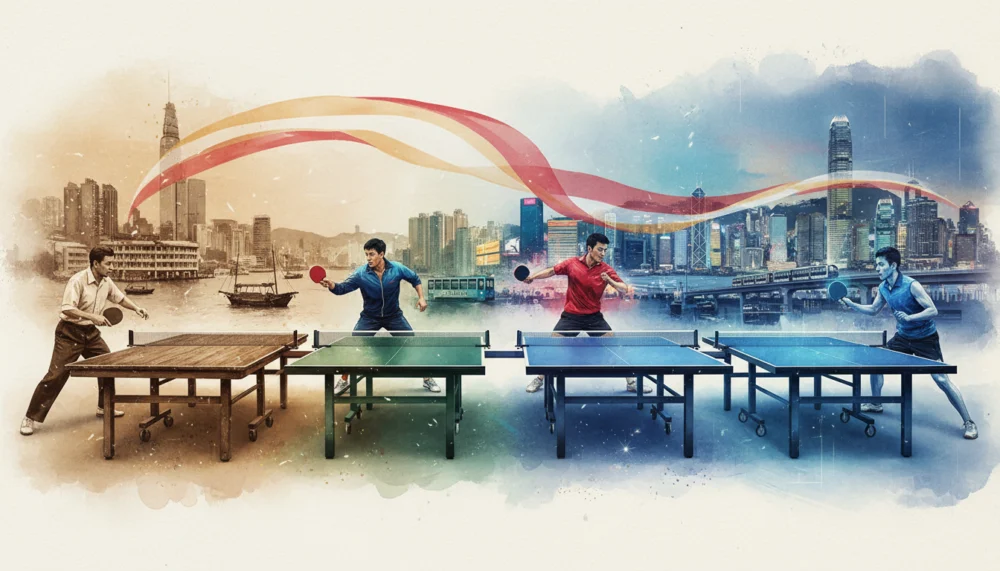
Table tennis, often affectionately referred to as ping pong, has a storied history in Hong Kong that mirrors the city’s own transformation from a colonial outpost to a global financial hub. The sport’s roots in the region date back to the early 20th century, when it was introduced as a popular recreational activity among the local population and expatriate communities alike.
By the 1930s, the popularity of the sport had grown sufficiently to warrant formal organization. In 1936, the Hong Kong Table Tennis Association (HKTTA) was officially established. This milestone provided a governing framework that allowed for the standardization of rules, the organization of local leagues, and the eventual participation of Hong Kong athletes in international competitions.
Post-War Expansion and Regional Dominance
Following the conclusion of World War II, table tennis in Hong Kong entered a period of rapid expansion. The 1950s and 1960s saw the emergence of highly skilled players who began to make their mark on the Asian circuit. During this era, Hong Kong became a frequent participant in the Asian Table Tennis Championships, often finishing among the top contenders.
The proximity to Mainland China played a significant role in the development of the sport. The exchange of coaching techniques and the influence of the Chinese penhold style helped shape the technical foundation of Hong Kong’s elite players. This period established Hong Kong as a respected regional power, capable of challenging established giants in the sport.
The Era of Ping Pong Diplomacy
In the 1970s, Hong Kong served as a vital bridge during the ‘Ping Pong Diplomacy’ era. As a neutral territory with strong ties to both the East and the West, the city hosted various exhibition matches and tournaments that facilitated international dialogue. This period not only elevated the profile of the sport locally but also underscored the diplomatic power of table tennis.
The Move Toward Professionalism (1980s – 1990s)
The 1980s marked a shift toward a more professional approach to training and competition. The Hong Kong government began to invest more heavily in sports infrastructure, leading to the establishment of the Hong Kong Sports Institute (HKSI). This facility provided elite athletes with access to world-class coaching, sports science support, and dedicated training environments.
During the 1990s, Hong Kong athletes began to achieve significant success on the world stage. Players like Chai Po Wa and Chan Tan Lui became household names, consistently ranking among the world’s best. Their success in the World Table Tennis Championships and the Asian Games laid the groundwork for the Olympic glory that was to follow.
The 1996 Atlanta Olympics Milestone
While Hong Kong had been competing in the Olympics for decades, the 1990s saw a surge in competitiveness. Although the first Olympic medal for Hong Kong came in windsurfing in 1996, the performance of the table tennis team during this period showed that the city was on the verge of a major international breakthrough in racket sports.
The 21st Century: Olympic Silver and Global Recognition
The turn of the millennium brought about the most successful era in the history of Hong Kong table tennis. The pinnacle of this success occurred at the 2004 Athens Olympics. The duo of Li Ching and Ko Lai Chak, often referred to as the ‘Twin Towers’ of Hong Kong table tennis, secured a silver medal in the Men’s Doubles event.
This achievement was a watershed moment for the city, sparking a surge in public interest and government funding. The silver medal proved that Hong Kong could compete with and defeat the world’s best, including powerhouse teams from China, Europe, and South Korea. It inspired a new generation of local youth to take up the sport seriously.
The Rise of Homegrown Talent
In the years following the 2004 success, there was a concerted effort to nurture homegrown talent. While Hong Kong had previously benefited from players who moved from the mainland, the focus shifted toward the ‘Local Heroes’ program. This initiative aimed to identify and train players born and raised in Hong Kong, ensuring the long-term sustainability of the sport.
The Modern Era and Tokyo 2020 Success
The 2010s saw the emergence of stars like Wong Chun-ting, who became one of the highest-ranked male players in Hong Kong’s history, reaching a career-high world ranking of number 6. His success in the ITTF World Tour and World Cup events solidified Hong Kong’s position as a consistent threat in the international arena.
The 2020 Tokyo Olympics (held in 2021) provided another historic moment. The Hong Kong Women’s Team, comprising Doo Hoi-kem, Lee Ho-ching, and Minnie Soo Wai-yam, captured the bronze medal. This victory was particularly significant as it was achieved by a team of players who were largely products of the local development system.
Technological Integration and Future Outlook
Today, the development of table tennis in Hong Kong involves the integration of advanced technology and data analytics. Coaches at the Hong Kong Sports Institute utilize video analysis and physiological monitoring to fine-tune player performance. This scientific approach ensures that Hong Kong remains at the cutting edge of the sport’s evolution.
Summary of Key Historical Milestones
- 1936: Formation of the Hong Kong Table Tennis Association.
- 1950s-60s: Regional emergence and participation in Asian Championships.
- 1982: Establishment of professional training at the Jubilee Sports Centre (now HKSI).
- 2004: Li Ching and Ko Lai Chak win Olympic Silver in Athens.
- 2021: Women’s Team wins Olympic Bronze in Tokyo.
The journey of table tennis in Hong Kong is a testament to the city’s resilience and dedication to excellence. From the early days of community clubs to the podiums of the Olympic Games, the sport has become an integral part of Hong Kong’s sporting identity. With continued investment in youth programs and elite facilities, the future of Hong Kong table tennis looks brighter than ever.