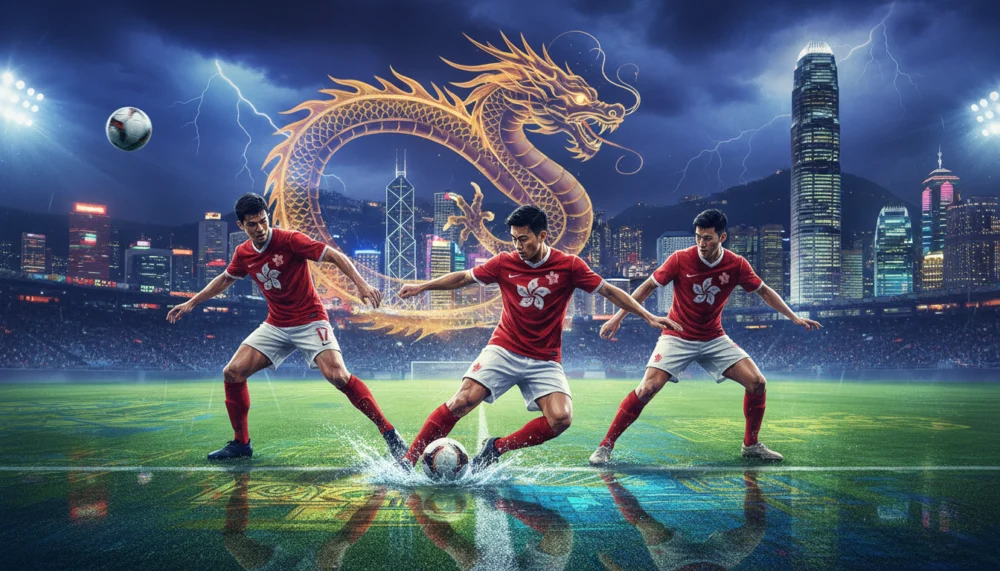
Hong Kong’s international football history is often defined by its resilience against Asian powerhouses. This stoic reputation has been built on the shoulders of exceptional defensive specialists who have donned the red jersey with pride. From the grit of the 1980s to the tactical sophistication of the modern era, these players have provided the foundation for some of the city’s greatest sporting achievements.
The Golden Era of Defensive Discipline
During the 1970s and 80s, Hong Kong was a formidable force in Asian football, largely due to a generation of defenders who combined physical toughness with an innate reading of the game. These players were not just tacklers; they were the architects of a ‘Safety First’ philosophy that allowed Hong Kong to punch above its weight in World Cup qualifiers and Asian Cup campaigns.
Ku Kam-fai: The Legend of May 19th
No discussion of Hong Kong’s defensive history is complete without mentioning Ku Kam-fai. A legendary center-back and occasional defensive midfielder, Ku is best remembered for his pivotal role in the ‘May 19th Incident’ in 1985. His defensive leadership helped Hong Kong secure a historic 2-1 victory over China in Beijing, a result that remains etched in the annals of local sports history.
Ku’s ability to organize the backline and his composure under pressure made him a mainstay of the national team for over a decade. His partnership with other defensive stalwarts created a ‘Wall of Hong Kong’ that frustrated even the most prolific strikers in the region.
Lai Sun-cheung: The Defensive Architect
Before becoming one of Hong Kong’s most respected coaches, Lai Sun-cheung was an accomplished defender. Known for his tactical intelligence, Lai represented Hong Kong during an era where defensive organization began to shift toward more modern systems. His understanding of positioning and marking later translated into his coaching philosophy, where he emphasized the importance of a solid defensive base.
The Integration of Naturalized Talent
As the football landscape evolved, Hong Kong began to bolster its defensive ranks with naturalized players who brought international experience and physical presence to the squad. This transition period in the late 1990s and early 2000s saw a significant shift in the profile of the typical Hong Kong defender.
Cristiano Cordeiro: The Brazilian Rock
Cristiano Cordeiro is widely regarded as one of the best defenders to ever play for Hong Kong. After arriving from Brazil and establishing himself as a star in the local league, Cordeiro gained citizenship and became the captain of the national team. His aerial dominance and leadership were instrumental in stabilizing a defense that faced increasingly difficult opposition in the AFC region.
Cordeiro’s impact went beyond his physical attributes. He brought a professional mindset and a winning culture to the dressing room, mentoring younger local players and setting a high standard for what was expected of an international defensive specialist.
Festus Baise: Power and Versatility
Another key figure in the naturalized era was Festus Baise. Known for his incredible strength and versatility, Baise could operate as both a center-back and a defensive midfielder. His ability to break up play and transition quickly into attack made him a vital asset during the mid-2010s, particularly during the memorable 2018 World Cup qualifying campaign.
Modern Pillars of the Backline
In recent years, the Hong Kong national team has continued to produce and attract defensive specialists who can compete at the highest levels of Asian football. The focus has shifted toward ball-playing defenders who can initiate attacks while maintaining structural integrity.
Helio Goncalves: The Consistent Veteran
Helio Goncalves has been a model of consistency for the Hong Kong representative team. His reading of the game and calmness on the ball have made him a preferred choice for multiple national team managers. Helio’s presence was crucial during Hong Kong’s successful qualification for the 2023 AFC Asian Cup, marking the city’s return to the continental stage after 54 years.
Sean Tse: The Hybrid Shield
Sean Tse represents the modern defensive specialist. Capable of playing as a deep-lying playmaker or a traditional center-back, Tse provides the tactical flexibility required in the modern game. His experience in English youth academies brought a level of technical proficiency that has helped Hong Kong maintain possession under pressure against high-pressing teams.
Tactical Evolution and the Defensive Identity
The role of the defensive specialist in Hong Kong has evolved significantly over the decades. While the primary objective remains preventing goals, the methods have changed to suit the modern game’s demands.
- Zonal Marking: Moving away from strict man-to-man marking to more sophisticated zonal systems.
- The High Press: Defenders are now expected to play higher up the pitch to compress the space for the opposition.
- Building from the Back: Goalkeepers and defenders are now the first line of attack, requiring high levels of passing accuracy.
The Role of the Defensive Midfielder
The ‘Anchor’ or defensive midfielder has become just as important as the center-backs in Hong Kong’s tactical setups. Players like Huang Yang have epitomized this role, acting as a screen for the defense and a link to the midfield. Huang’s tireless work rate and disciplined positioning earned him over 60 caps and the respect of fans and teammates alike.
Huang Yang: The Silent Leader
As the longtime captain of both Kitchee and the Hong Kong national team, Huang Yang demonstrated the importance of the ‘No. 6’ role. His ability to intercept passes and disrupt the rhythm of the opposition allowed more creative players to flourish further up the pitch.
Challenges and Future Prospects
Maintaining a high standard of defensive play is a constant challenge for the Hong Kong Football Association (HKFA). With the increasing quality of strikers across Asia, the next generation of Hong Kong defenders must be faster, stronger, and more tactically aware than ever before.
Youth Development in Defense
The HKFA has placed a renewed focus on youth development, ensuring that young defenders are exposed to international competition early in their careers. The emergence of young talents who are comfortable on the ball suggests that the future of Hong Kong’s defense will be characterized by technical skill as much as physical bravery.
Conclusion: A Legacy of Resilience
The defensive specialists who have represented Hong Kong internationally are more than just players; they are the embodiment of the city’s fighting spirit. Whether it was the historic defiance of the 80s or the professional organization of the modern era, these individuals have ensured that Hong Kong remains a respected name on the international football stage. As the team looks toward future Asian Cup and World Cup cycles, the lessons learned from these defensive legends will continue to guide the way.