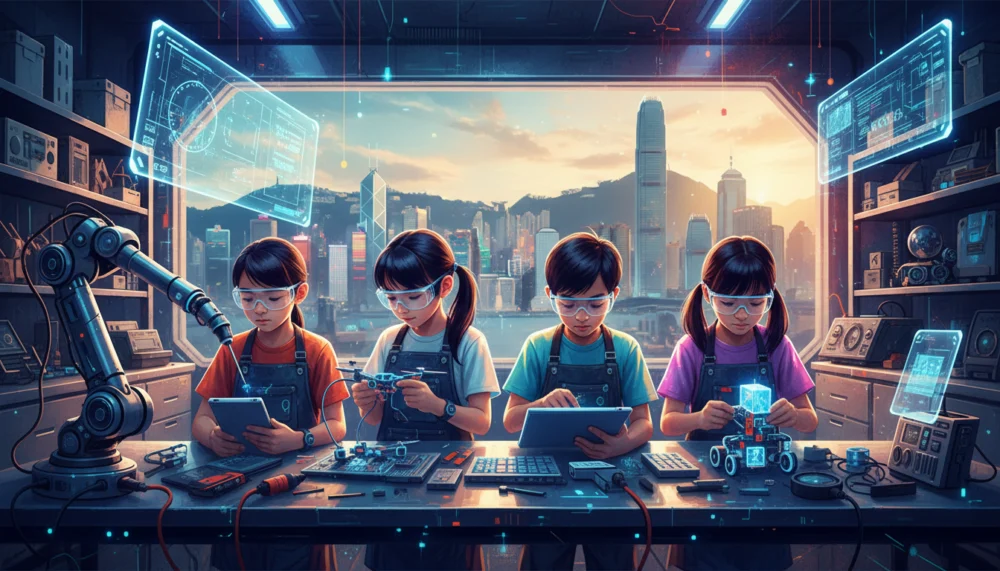
Understanding the Need for Technical Literacy
In an era defined by rapid digital transformation, Hong Kong is at a critical juncture. The city’s ambition to become an international innovation and technology hub requires a workforce that is not only proficient in traditional disciplines but also deeply literate in technical fields. Early technical training serves as the foundation for this transformation, ensuring that the next generation can navigate and lead in a tech-driven world.
The Shifting Economic Landscape of Hong Kong
Historically, Hong Kong’s economy has been dominated by finance, logistics, and professional services. However, the rise of the Greater Bay Area initiative and the local focus on the Smart City Blueprint have signaled a shift. Technology is no longer a niche sector; it is the infrastructure upon which all other industries are being rebuilt.
Bridging the Growing Skills Gap
Despite the high demand for developers, data scientists, and cybersecurity experts, there remains a significant skills gap in the local labor market. By introducing technical training at an early age, Hong Kong can ensure a steady pipeline of talent that meets the evolving needs of employers, reducing the reliance on external recruitment.
Cognitive and Developmental Benefits
Technical training is about more than just learning how to code or build hardware. It is a powerful tool for cognitive development. When children engage with technical subjects, they learn to break down complex problems into manageable parts, a process known as computational thinking.
Fostering Critical Problem-Solving Skills
Early exposure to robotics and programming encourages students to experiment and iterate. In these environments, failure is viewed as a data point rather than a setback. This resilience and analytical approach to problem-solving are transferable skills that benefit students in every aspect of their academic and professional lives.
The Role of STEM in Modern Education
The integration of Science, Technology, Engineering, and Mathematics (STEM) into the primary and secondary school curriculum is essential. Schools in Hong Kong are increasingly adopting project-based learning models that allow students to apply theoretical knowledge to real-world technical challenges.
- Hands-on Learning: Building circuits or coding simple apps makes abstract concepts tangible.
- Collaborative Projects: Technical tasks often require teamwork, mirroring the collaborative nature of the modern tech industry.
- Digital Citizenship: Understanding how technology works helps students become responsible and informed users of digital tools.
Preparing for the Jobs of the Future
Many of the jobs that today’s students will hold in ten years do not yet exist. However, we know that these roles will require a high degree of technical fluency. From Artificial Intelligence (AI) to blockchain technology, early training provides a head start in understanding the core principles that will define future careers.
Enhancing Global Competitiveness
Hong Kong competes on a global stage with other tech-forward cities like Singapore, London, and San Francisco. To maintain its competitive edge, the city must cultivate a talent pool that is comfortable with innovation. Early technical education ensures that Hong Kong’s youth are not just consumers of technology but creators of it.
Overcoming Cultural and Institutional Barriers
While the benefits are clear, there are challenges to implementing widespread technical training. Traditional views on education often prioritize rote learning and conventional academic paths. Shifting the mindset of parents and educators to value technical vocational skills is crucial for long-term success.
The Importance of Community and Government Support
Government grants, community-led coding bootcamps, and partnerships with private tech firms are vital. These initiatives provide the resources and mentorship necessary to make technical training accessible to students from all socioeconomic backgrounds, ensuring an inclusive digital future for Hong Kong.
Conclusion: A Strategic Investment in Human Capital
Investing in early technical training is an investment in Hong Kong’s most valuable resource: its people. By equipping the youth with technical skills, the city is building a resilient, innovative, and future-proof economy that can withstand the challenges of the 21st century.
Technical education should not be seen as an alternative to academic excellence, but as a necessary component of it. As we look forward, the ability to understand and manipulate technology will be the primary driver of social and economic mobility in the region.