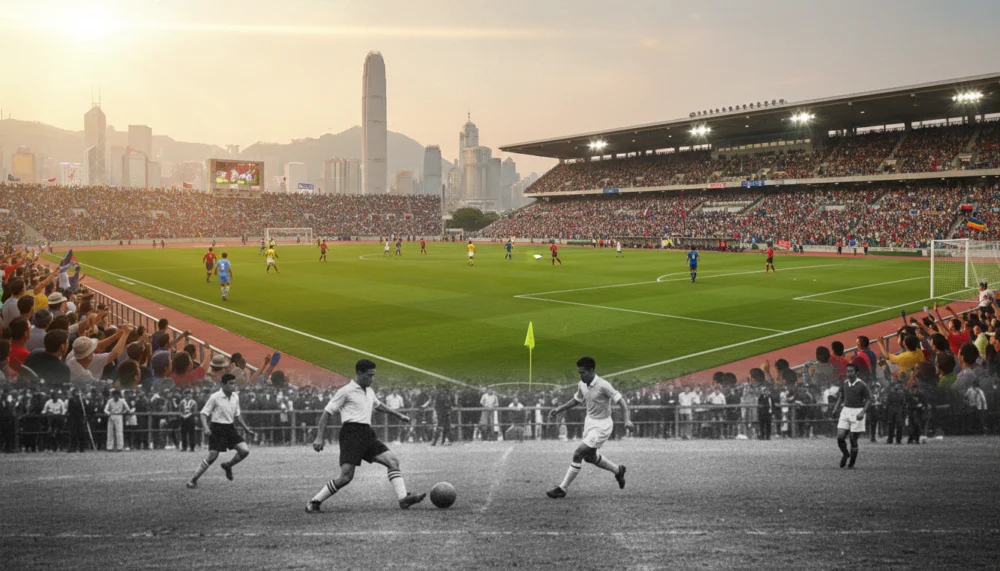
The landscape of professional football in Hong Kong has undergone a significant transformation over the last decade. As the Hong Kong Premier League (HKPL) continues to mature, the focus has shifted from mere participation to sustainable growth and enhanced competitive depth. This evolution is not just limited to the top flight but extends throughout the pyramid, including the First, Second, and Third Divisions, creating a more robust ecosystem for the sport.
The Rise of the Hong Kong Premier League (HKPL)
Since its rebranding and restructuring, the HKPL has served as the pinnacle of domestic football in the region. The transition from the old First Division to a fully professionalized Premier League was designed to improve club licensing standards, financial transparency, and overall match quality. These efforts have slowly but surely raised the profile of local football, attracting a more dedicated fan base and higher-quality personnel.
Professionalization and Club Licensing
One of the cornerstones of league growth has been the implementation of rigorous club licensing criteria. Clubs are now required to meet specific benchmarks regarding financial stability, youth academy structures, and stadium facilities. This has forced organizations to move away from short-term planning toward long-term strategic development, ensuring that the league remains viable even during economic fluctuations.
Improving Infrastructure and Match Facilities
The quality of venues has also seen a steady improvement. By collaborating with the Leisure and Cultural Services Department (LCSD), the Hong Kong Football Association (HKFA) has worked to ensure that pitches are maintained at a professional standard. Modern facilities not only benefit the players’ performance but also enhance the spectator experience, which is crucial for commercial growth.
Analyzing Competitive Depth Across Divisions
A healthy national league is defined by its competitive depth—the idea that any team on a given day can challenge the top-tier giants. In recent seasons, the gap between the traditional ‘Big Three’ and the rest of the table has begun to narrow. This shift is a result of better scouting, improved coaching education, and a more equitable distribution of domestic talent.
- Increased parity in mid-table clashes
- Rise of district-based clubs with strong community ties
- Higher tactical proficiency across all coaching staffs
- Strategic recruitment of foreign players who elevate the local standard
The Role of the First and Second Divisions
Growth is not exclusive to the Premier League. The lower tiers of the national league system provide a vital pathway for semi-professional players and developing clubs. The competitive nature of the First Division, in particular, ensures that teams seeking promotion are battle-tested and administratively prepared for the rigors of the top flight.
Strategic Youth Development Initiatives
For the national league to sustain its growth, a constant influx of local talent is mandatory. The HKFA’s Vision 2025 and subsequent strategic plans have placed a heavy emphasis on grassroots and youth academy integration. By mandating that HKPL clubs operate youth teams across various age groups, the league ensures a pipeline of players who are familiar with professional environments from a young age.
Integration of Young Talents into Senior Squads
Recent regulations requiring teams to field a minimum number of U-22 players in specific cup competitions have accelerated the development of homegrown stars. These ‘young guns’ are no longer just benchwarmers; many have become integral starters, proving that the investment in youth coaching is paying dividends on the pitch.
Economic Factors Influencing League Growth
Commercial viability remains a challenge, yet there are signs of progress. Corporate sponsorships and broadcasting rights have become more structured. The digital age has allowed clubs to reach fans directly through social media, creating new revenue streams through merchandising and digital content. This financial diversification is essential for clubs to compete at the continental level, such as in the AFC Champions League.
Fan Engagement and Community Support
The growth of the national league is intrinsically linked to its connection with the local community. District-based teams like Southern District and Tai Po have successfully tapped into local pride, consistently drawing impressive crowds. This grassroots support creates a vibrant atmosphere that makes the league more attractive to external investors and sponsors.
Overcoming Challenges in the Local Game
Despite the positive trajectory, several hurdles remain. Land scarcity in Hong Kong makes the development of private training centers difficult, often forcing professional teams to share public facilities. Furthermore, the competition for viewership with European leagues like the English Premier League requires the local game to offer a unique, ‘live’ value proposition that cannot be replicated by a television screen.
The Future Outlook for Hong Kong Football
The future of the national league in Hong Kong looks promising, provided the momentum of professionalization continues. With the potential for closer integration with the Greater Bay Area and the continued refinement of the youth development pathway, the competitive depth of the league is set to reach new heights. The goal remains clear: to establish Hong Kong as a consistent and formidable force in Asian football.
Ultimately, the growth of the national league is a marathon, not a sprint. Through the collective efforts of the HKFA, the clubs, and the passionate supporters, the foundation is being laid for a sustainable and highly competitive footballing culture that the city can be proud of.