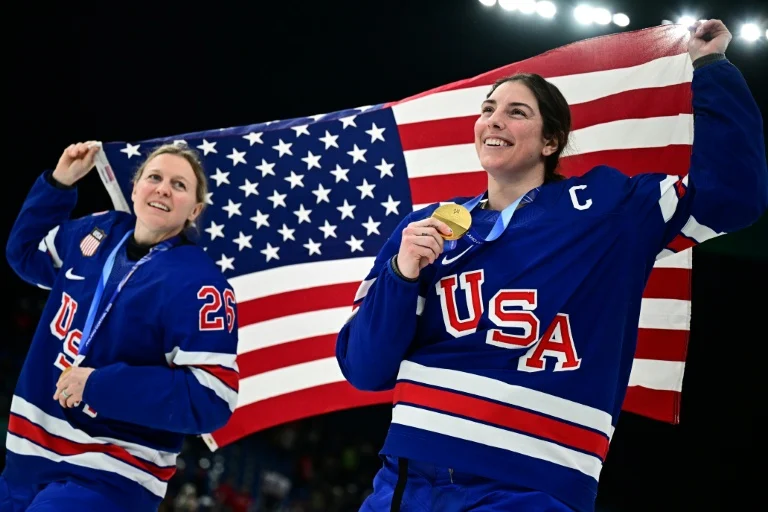
LOS ANGELES – The celebratory atmosphere surrounding the United States women’s Olympic ice hockey team’s hard-fought gold medal victory in Milan-Cortina was marred by controversy, as comments made by President Donald Trump during a congratulatory call to the men’s team ignited widespread criticism. Hilary Knight, captain of the victorious women’s squad and a decorated five-time Olympian, expressed her disappointment that what she termed a "distasteful joke" by the President had detracted from the significant achievements of American female athletes on the global stage.
The incident unfolded on February 20, 2026, shortly after the US men’s ice hockey team secured their own gold medal, defeating archrival Canada in a thrilling final. President Trump, in a show of presidential support, extended a congratulatory phone call to the men’s team as they were celebrating their hard-won championship. During this call, the President extended an invitation to the team to attend his upcoming State of the Union address. In a remark that would later draw considerable ire, President Trump added that he would "have to ask the triumphant women’s team as well or risk being ‘impeached’," a statement that many interpreted as belittling the women’s accomplishments and their significance.
This remark, captured and broadcast, quickly became a focal point of discussion and drew sharp criticism from various quarters, including sports commentators, fans, and women’s rights advocates. The implication that the women’s team’s invitation was a mere afterthought, contingent on avoiding political repercussions for the President, was seen as deeply disrespectful. Several players on the men’s team were observed to have chuckled at the President’s comment, a reaction that further fueled the backlash.
Women’s Team Declines Presidential Invitation
In the wake of the controversy, the US women’s ice hockey team officially declined an invitation to be present at President Trump’s State of the Union address, scheduled for Tuesday night. USA Hockey, the governing body for the sport in the United States, stated that the team had prior commitments, a response that was widely understood as a subtle but firm rejection stemming from the President’s remarks. This decision underscored the gravity with which the team and its supporters viewed the situation.
Captain Knight Voices Disappointment
Speaking on ESPN’s Sportscenter, Hilary Knight, a pivotal figure in the women’s team’s success, articulated her dismay. "I thought it was sort of a distasteful joke, and unfortunately that is overshadowing a lot of the success, the success of just women at the Olympics carrying for Team USA and having amazing gold medal feats," Knight stated. Her words highlighted the frustration felt by many that the team’s historic achievement was being eclipsed by a politically charged and, in her view, inappropriate comment. Knight, who has been a consistent force for the US women’s team across multiple Olympic cycles, emphasized the broader implications of the President’s remark, suggesting it reflected a larger societal issue of how women’s achievements are perceived and discussed, not just in sports but across all industries.
Solidarity Amidst Controversy
Despite the awkwardness and criticism stemming from President Trump’s remarks, Hilary Knight was quick to emphasize the strong bonds of camaraderie and mutual respect that exist between the US men’s and women’s national ice hockey teams. "I think there’s a genuine level of support there and respect," she said. "I think that’s being overshadowed by a quick lapse. I think the guys were in a tough spot, so I think it’s a shame this storyline and narrative has kind of blown up and (is) overshadowing that connection and genuine interest in one another and cheering each other on." Her comments aimed to diffuse some of the tension and redirect focus back to the shared pride and support within the broader US hockey community. She acknowledged the difficult position the male athletes found themselves in, caught between a presidential call and the potential for awkwardness or perceived disloyalty.
Presidential Honors for the Men’s Team
Following their Olympic victory, the US men’s ice hockey team was accorded significant presidential recognition. They were feted at the White House, including a visit to the Oval Office, and were further honored during President Trump’s address before a joint session of Congress. A notable highlight of the men’s team’s reception was the presentation of the Presidential Medal of Freedom to goaltender Connor Hellebuyck, the nation’s highest civilian honor, acknowledging his exceptional performance and leadership during the Olympic tournament.
However, reports from US media indicated that a small number of players from the men’s team did not attend all of the official engagements. These athletes reportedly cited the need to return to their respective National Hockey League (NHL) teams for training and to spend time with their families, suggesting a desire to move beyond the political spotlight and resume their professional careers.
A Remarkable Gold Medal Performance
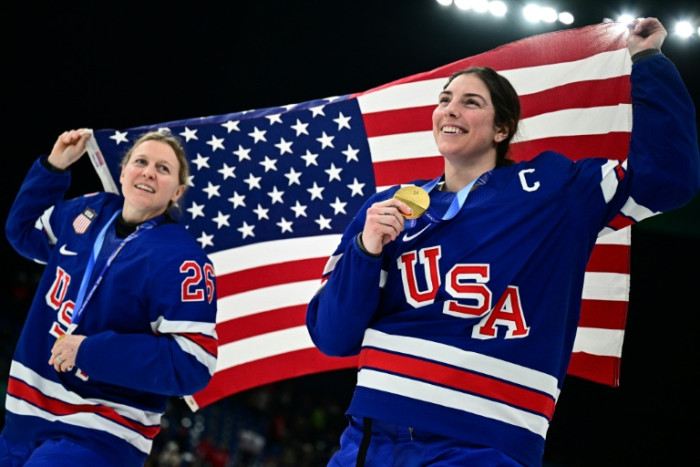
The women’s team’s path to Olympic gold was a testament to their resilience and skill. In the final match against Canada, a fiercely contested rivalry that has defined women’s international ice hockey for decades, the US team faced immense pressure. With mere minutes remaining in regulation time and trailing by a goal, Hilary Knight scored the crucial equalizer, sending the game into overtime. It was Megan Keller who then netted the game-winning goal, securing the gold medal for the United States and capping a remarkable tournament performance.
At 36 years old, Hilary Knight has established herself as one of the most accomplished figures in American hockey history. Her gold medal in Milan-Cortina marked her second Olympic title. With 15 Olympic goals to her name, she holds the record for the most goals scored by any US hockey player, male or female, at the Olympic Games. Her enduring legacy and continued excellence underscore the caliber of talent within the US women’s program. Knight had previously announced that the Milan-Cortina Games would likely be her last Olympic appearance, making this victory a poignant culmination of her illustrious career.
Broader Implications and the Path Forward
The controversy ignited by President Trump’s remarks serves as a stark reminder of the ongoing discourse surrounding gender equality and the recognition of women’s achievements. Knight’s call for this incident to be a "really good learning point" resonates beyond the realm of sports. Her assertion that "Women aren’t less than, and their achievements shouldn’t be overshadowed by anything else other than how great they are" encapsulates a broader societal aspiration for equitable recognition and respect.
The incident also raises questions about the intersection of sports, politics, and gender. While the men’s team’s victory was a cause for national pride, the manner in which the congratulatory gestures were handled brought an unwanted political dimension to the celebration. The women’s team’s decision to decline the invitation, though framed by prior commitments, was perceived by many as a principled stance against perceived disrespect.
Looking ahead, the enduring success of the US women’s Olympic ice hockey team, coupled with their vocal advocacy for recognition, is likely to continue to shape conversations around gender parity in sports. The team’s gold medal performance in Milan-Cortina, a feat of athletic excellence, should rightly be remembered for the skill, dedication, and triumph it represents, rather than being overshadowed by political commentary. The experience has undoubtedly provided a powerful platform for Knight and her teammates to advocate for greater respect and acknowledgement of women’s contributions across all fields.
The timeline of events:
- February 19, 2026: US Women’s Ice Hockey team wins Olympic Gold Medal in Milan-Cortina.
- February 20, 2026: US Men’s Ice Hockey team wins Olympic Gold Medal. President Trump calls the men’s team to offer congratulations and invites them to the State of the Union address, making a remark about the women’s team.
- February 21, 2026: Reports emerge of the President’s comment and the men’s team’s reaction, sparking criticism.
- February 22, 2026: Hilary Knight provides comments to ESPN’s Sportscenter expressing disappointment.
- February 23, 2026: The US Women’s team officially declines the invitation to the State of the Union address.
- February 24, 2026: US Men’s team is honored at the White House and during President Trump’s State of the Union address. Connor Hellebuyck receives the Presidential Medal of Freedom.
Supporting Data:
The Milan-Cortina Winter Olympics saw a significant focus on women’s sports, with record participation and viewership for many events. The US women’s ice hockey team’s victory was the culmination of a dominant performance throughout the tournament, where they outscored their opponents by a considerable margin. Hilary Knight’s record-breaking 15 Olympic goals highlight the sustained excellence of the US women’s program, which has been a powerhouse in international hockey for decades, consistently contending for gold medals. The rivalry with Canada is one of the most intense in sports, with their gold medal games often drawing massive television audiences.
Official Responses:
While President Trump’s office did not issue a direct statement addressing the controversy surrounding his remarks, his actions, including the invitation to the men’s team and the presentation of the Presidential Medal of Freedom, demonstrated his continued support for the victorious male athletes. USA Hockey’s statement regarding the women’s team’s prior commitments served as their official response to the invitation and the ensuing controversy. Hilary Knight’s public statements on ESPN provided the most direct and personal reaction from the women’s team leadership.
Broader Impact and Implications:
The incident underscores the growing awareness and sensitivity surrounding gender-based remarks in public discourse. It highlights the power of athletes, particularly prominent figures like Hilary Knight, to use their platforms to advocate for gender equality and challenge potentially offensive commentary. The event also illustrates the complex relationship between sports achievements and political recognition, and how the former can be inadvertently impacted by the latter. For young girls and women aspiring to participate in sports, the continued excellence and vocal advocacy of athletes like Knight serve as powerful inspiration, reinforcing the message that their achievements are significant and deserving of unwavering respect and recognition. The controversy, while unfortunate, has undeniably amplified the discussion on these critical issues.