The persistent ambition to elevate Chinese football onto the global stage is being meticulously cultivated from the very foundations of society, with a nationwide emphasis on grassroots development that has begun to yield tangible results and garner international recognition. This long-term strategic shift, driven by dedicated individuals and robust national policies, seeks to transform the country’s footballing landscape from a perceived "desert" into a fertile ground for future talent, despite the senior national team’s recent struggles in World Cup qualification.
At the heart of this transformation are veteran coaches and educators like Gao Yuan, who, with 28 years of grassroots coaching experience, describes himself as a "seed sower" for China’s football dream. As the director of the soccer education and research department at Capital University of Physical Education and Sports in Beijing, Gao firmly believes that the initial efforts are starting to sprout. "The starting point of the country’s soccer landscape was like a desert, and for decades we have been sowing the seeds for the future," Gao remarked, emphasizing a deep-seated conviction that sustained, collective effort will eventually produce excellent Chinese players. "If everyone can truly work for the good of the future generations, excellent Chinese soccer players will emerge. I’m not bragging. It will take time and I always have faith."
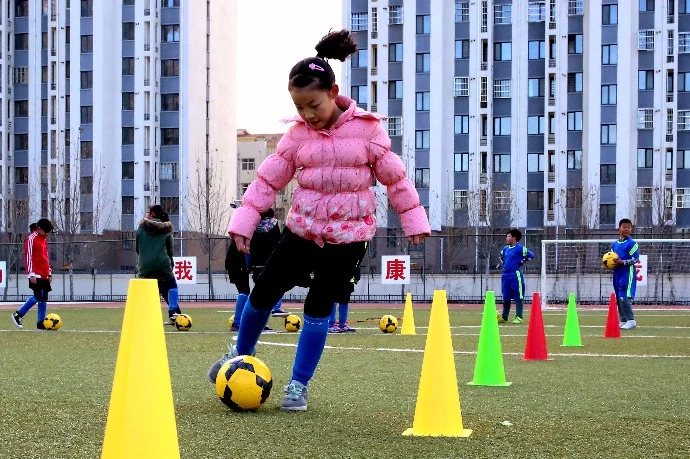
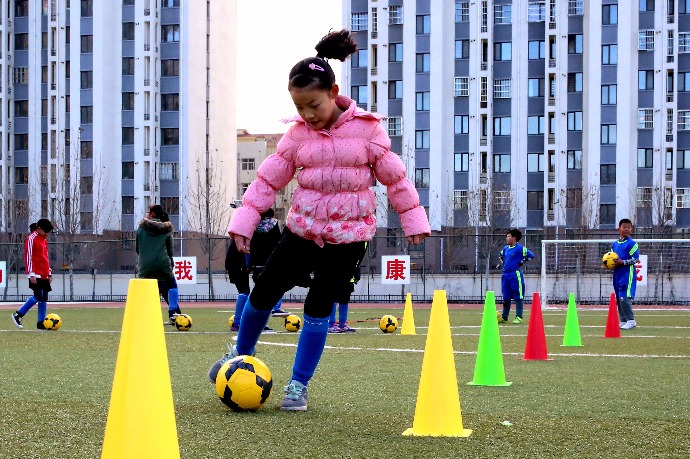
This profound conviction resonates across China, mirrored by countless other long-serving devotees of the game. A thousand kilometers away, in Xi’an, Shaanxi province, Wang Liangchao exemplifies this dedication. For over two decades, Wang has been running a free soccer clinic for local children, an initiative he refers to as "the light of hope." Since its inception in 1996, the clinic has welcomed children aged 4 to 13 on weekends and during school holidays, providing tuition-free coaching where only boots and uniforms are required. Wang, who began his coaching career at Northwest University of Political Science and Law in 1991, explained his motivation: "The original purpose of starting a free soccer clinic was to attract more children to the game. This is just like a hope project in soccer. I want to start a process, which can be easily copied and spread by other coaches, to promote soccer among the younger generations. My youngest student was four years old." Such efforts are indicative of a broader movement, seen in places like Tonglu county, Zhejiang province, where kindergarten children began enjoying their first professional soccer lessons in September 2017, as captured in vivid imagery showcasing the youthful enthusiasm for the sport.
The National Ambition and Strategic Imperatives
China’s renewed focus on grassroots football is not merely an isolated phenomenon but an integral component of a sweeping national strategy. The "Overall Plan for Chinese Football Reform and Development," unveiled in 2015, marked a pivotal moment, outlining an ambitious roadmap to transform China into a global footballing powerhouse by 2050. This plan set specific targets, including increasing the number of football schools, expanding the player base, and ultimately, qualifying for and even winning the FIFA World Cup.
Historically, despite immense popular interest in football, China has struggled to translate this enthusiasm into consistent international success. The national men’s team has only qualified for the World Cup once, in 2002, and has often underperformed relative to national expectations and investment. Analysts frequently attributed these struggles to a narrow talent pool, insufficient youth development systems, and a lack of systematic grassroots engagement. The 2015 reform plan directly addresses these historical shortcomings by mandating widespread football education in schools, significant investment in infrastructure, and comprehensive coach training programs. It represents a paradigm shift from a top-down, elite-focused approach to a bottom-up, mass-participation model.
Chronology of Grassroots Development and Milestones
The evolution of China’s grassroots football efforts can be traced through several key periods and milestones:
- Early Individual Initiatives (Pre-2000s): While not centrally coordinated, the late 20th century saw pioneering individuals like Wang Liangchao establish local, community-driven football programs, often operating with limited resources but immense passion. Wang’s free clinic, started in 1996, is a testament to these early, independent endeavors that laid some groundwork.
- Emergence of Awareness (2000s-Early 2010s): Following the 2002 World Cup qualification, there was a growing recognition within sports authorities of the need for broader youth development. Initial efforts focused on setting up more professional youth academies, but a truly comprehensive grassroots strategy was still nascent.
- International Recognition (2013): The Chinese Football Association (CFA) received its first Asian Football Confederation (AFC) President Recognition Award for Grassroots Football. This award signified a burgeoning commitment to grassroots development, even before the comprehensive national plan was fully articulated. It highlighted early progress in establishing foundational programs.
- The 2015 Reform Plan and Accelerated Growth: The unveiling of the "Overall Plan for Chinese Football Reform and Development" in 2015 dramatically accelerated grassroots initiatives. This plan provided a clear mandate and significant resources for integrating football into the national education system, building new facilities, and training a new generation of coaches.
- Post-2015 Implementation (2015-Present): This period has seen a concerted push to implement the plan’s directives. Thousands of "football-characteristic schools" have been designated, curriculum development has been prioritized, and local governments have been encouraged to invest in community pitches and youth leagues. The image from Tonglu county in September 2017, showing kindergarteners receiving professional coaching, perfectly illustrates the plan’s reach into even the youngest demographics.
- Continued International Acclaim (2017): The CFA’s receipt of the AFC President Recognition Award for Grassroots Football for the second time in 2017, at the AFC’s annual gala in Thailand, underscored the sustained and intensified efforts. This repeated recognition affirmed that China’s strategies were not only ambitious but also effectively implemented and producing measurable results in terms of participation and program quality.
Supporting Data and Program Details
The recent surge in grassroots activity is supported by impressive data reflecting a nationwide mobilization. The AFC award in 2017 specifically acknowledged the "special attention China has paid to technical programs recently." This included the execution of over 260 training courses across the nation, engaging approximately 17,000 participants – a figure that represents a significant expansion of the coaching and administrative talent pool dedicated to youth football. These courses are crucial for standardizing coaching methodologies, ensuring child-friendly practices, and equipping educators with the skills to nurture young players effectively.
Beyond coach training, other key statistics highlight the scale of China’s grassroots push:
- School Football Integration: By the end of 2017, the Ministry of Education reported that over 20,000 "football-characteristic schools" had been established, with a target to reach 50,000 by 2025. These schools integrate football into their physical education curriculum, organize inter-school leagues, and provide dedicated coaching.
- Player Participation: Reports indicate that millions of children are now regularly participating in organized football activities within schools and community clubs. While precise national figures are fluid, estimates suggest a multi-fold increase in registered youth players since 2015, with participation in informal settings being even higher.
- Infrastructure Development: There has been a concerted effort to construct new football pitches and upgrade existing facilities. Thousands of new pitches have been built or renovated in schools and public parks, dramatically increasing access to suitable playing surfaces, particularly in urban areas and increasingly in rural regions.
- Talent Scouting and Development Pathways: Grassroots programs are increasingly linked to regional and national talent identification systems, aiming to create clear pathways for promising young players to progress from local clubs to elite academies. This ensures that the seeds sown at the community level have the potential to grow into professional careers.
- Diverse Program Offerings: Beyond formal school programs, a multitude of community clubs, weekend clinics, and summer camps have emerged, offering varied entry points for children of all ages and skill levels. Many, like Wang Liangchao’s clinic, remain free or low-cost to ensure broad accessibility.
Official Responses and Broader Implications
The consistent international recognition, particularly from the AFC, serves as a powerful validation of China’s grassroots strategy. Speaking at the AFC gala, a representative from the Chinese Football Association, upon receiving the award, likely reiterated China’s unwavering commitment to youth development. "This award is a testament to the hard work and dedication of countless individuals across China – coaches, teachers, volunteers, and parents – who are investing in the future of our sport," an official might have stated, underscoring the collective effort. "It reinforces our belief that a strong foundation at the grassroots level is indispensable for achieving our long-term national footballing aspirations."
Officials from China’s Ministry of Education have also consistently emphasized the broader educational and social benefits of integrating football into schools. "Football is not just about developing athletes; it’s about fostering teamwork, discipline, resilience, and a healthy lifestyle among our youth," a ministry spokesperson would likely affirm, highlighting the holistic development aspect. "By making football accessible and enjoyable for every child, we are contributing to their physical well-being, character development, and social skills."
The implications of this grassroots revolution extend far beyond the pitch:
- Sporting Success: While immediate results for the senior national team remain elusive, the sustained investment in youth development is expected to significantly broaden the talent pool. This could lead to a generation of technically proficient and strategically astute players, ultimately enhancing China’s competitiveness in international tournaments in the long run. The sheer numbers of children now exposed to professional coaching increases the statistical probability of identifying and nurturing exceptional talent.
- Public Health and Well-being: By promoting active participation in football, the initiative contributes significantly to combating childhood obesity and promoting a healthier lifestyle among young Chinese citizens. It instills habits of physical activity from an early age, which can have lasting positive effects on public health.
- Social Development and Community Building: Grassroots football fosters community spirit and provides positive outlets for children’s energy. It teaches invaluable life skills such as teamwork, communication, leadership, and fair play. For many children, these programs offer a sense of belonging and purpose beyond academic pursuits.
- Economic Impact: The growth of grassroots football stimulates the sports industry, creating demand for coaches, referees, administrative staff, sports equipment, and facility construction. This contributes to job creation and economic diversification, particularly in the burgeoning sports sector.
- Cultural Shift: Over time, this widespread engagement is likely to embed football more deeply into China’s cultural fabric, moving it from a spectator sport with intermittent national team interest to a participatory activity integral to childhood and community life. This cultural shift is crucial for sustained long-term development.
However, challenges persist. Ensuring equitable access to quality coaching and facilities across all regions, particularly in remote rural areas, remains an ongoing task. Maintaining parental support, often prioritized towards academic success, also requires continuous engagement and demonstration of the broader benefits of sports. Furthermore, ensuring the quality and integrity of the expanded coaching workforce is paramount to prevent burnout and maintain developmental standards.
In conclusion, the meticulous cultivation of football at the grassroots level in China represents a profound long-term commitment. Driven by the unwavering faith of individuals like Gao Yuan and Wang Liangchao, and supported by robust national policies and significant investment, the seeds of China’s football dream are indeed sprouting. While the journey to global footballing prominence is undeniably long and arduous, the current comprehensive and dedicated approach at the foundational level lays a strong, unprecedented groundwork, offering a tangible vision of a future where China’s footballing aspirations can genuinely take root and flourish.