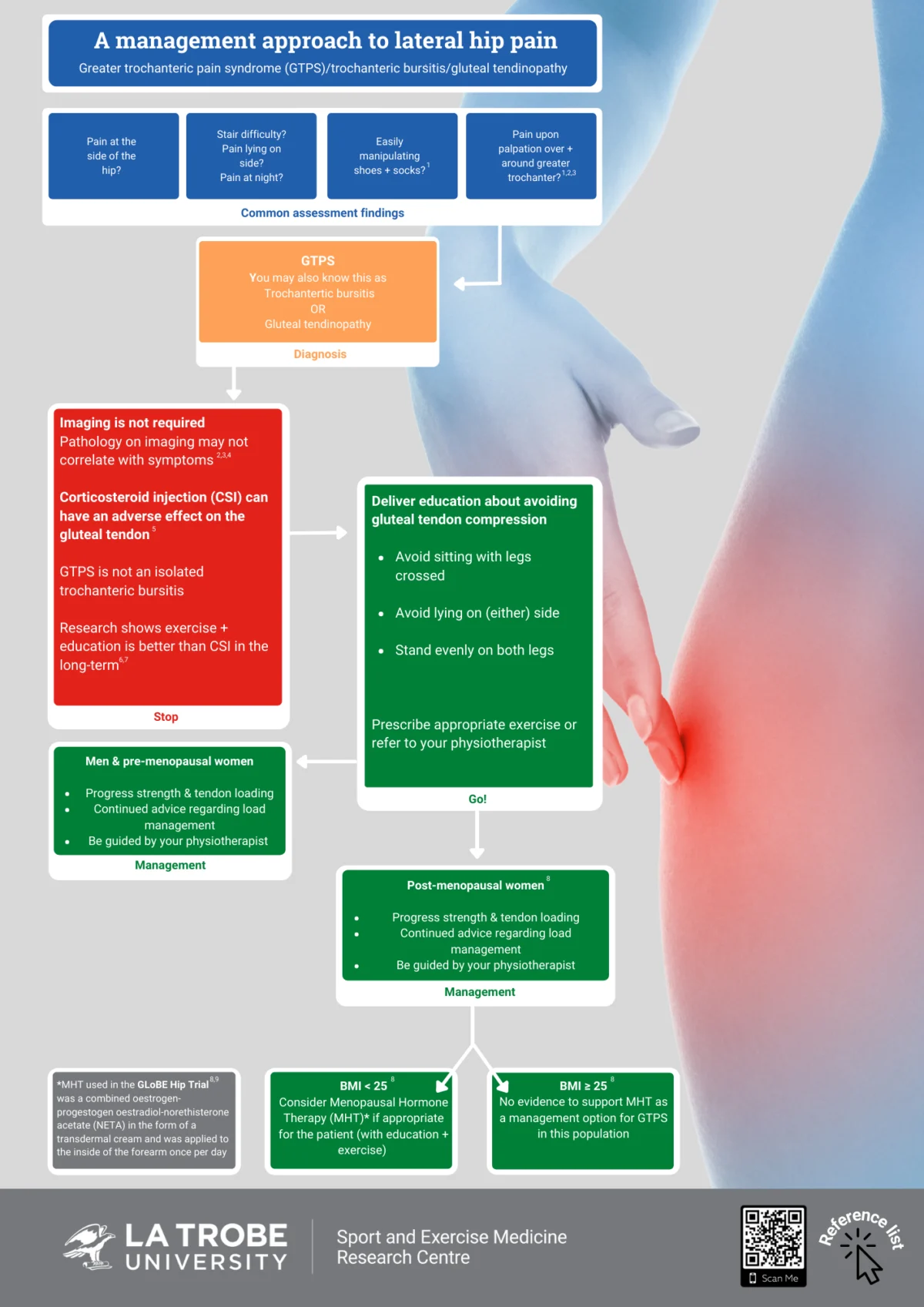
Greater trochanteric pain syndrome (GTPS) has emerged as a significant clinical challenge within the field of musculoskeletal medicine, characterized primarily by debilitating pain on the lateral aspect of the hip and upper thigh. While the condition can affect individuals across all demographics, research increasingly identifies it as a chronic and life-altering ailment that disproportionately impacts post-menopausal women. To address the complexities of this condition, a dedicated research team at La Trobe University recently conducted a comprehensive study, known as the GLoBE Hip Trial, providing new insights into the efficacy of combining exercise, education, and menopausal hormone therapy (MHT). The findings, published in The American Journal of Sports Medicine, suggest a paradigm shift in how clinicians approach the management of lateral hip pain, particularly for women navigating the physiological changes of menopause.
Understanding Greater Trochanteric Pain Syndrome
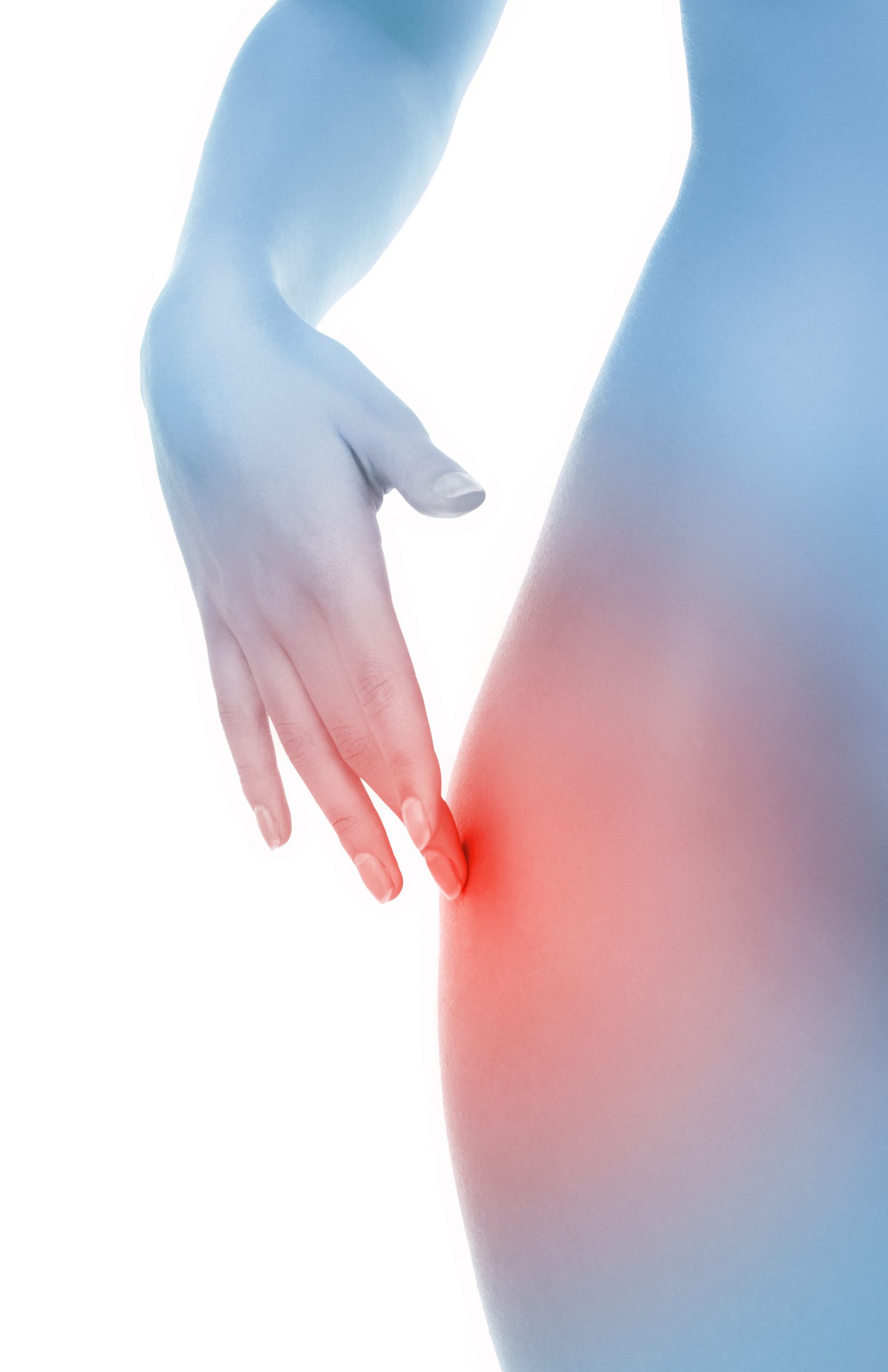
Historically referred to as trochanteric bursitis, Greater Trochanteric Pain Syndrome is now recognized as a more complex umbrella term. It encompasses a range of pathologies, including gluteal tendinopathy—tears or degeneration of the gluteus medius and minimus tendons—and inflammation of the associated bursae. The pain is typically localized to the bony prominence of the outer hip and can radiate down the lateral thigh toward the knee.
The impact of GTPS on a patient’s quality of life is profound. Simple activities such as walking, climbing stairs, or even lying on the affected side at night can become excruciating. For many, the chronicity of the pain leads to sleep disturbances, reduced physical activity, and a subsequent decline in mental well-being. Epidemiological data suggests that GTPS affects approximately 10% to 25% of the general population at some point in their lives, with the highest prevalence observed in women aged 50 to 70.
The Biological Link: Hormones and Tendon Health
The heightened prevalence of GTPS in post-menopausal women is not coincidental. Researchers have long hypothesized a link between the decline of circulating female sex hormones, specifically estrogen, and the degradation of connective tissues. Estrogen plays a vital role in maintaining the structural integrity of tendons by promoting collagen synthesis and regulating the extracellular matrix.
When estrogen levels plummet during and after menopause, the gluteal tendons may become more susceptible to load-related injuries and degenerative changes. This hormonal shift creates a physiological environment where mechanical stress that was once easily tolerated begins to cause micro-trauma and persistent inflammation. Understanding this biological underpinning was the catalyst for the La Trobe University team to investigate whether replacing these hormones could augment traditional physical therapies.
The GLoBE Hip Trial: A Scientific Breakdown
To test the efficacy of hormonal and physical interventions, the research team, led by Dr. Rachael Mary Cowan and supported by Matthew Wirdnam, designed the GLoBE Hip Trial. This study was structured as a blinded 2 x 2 factorial randomized controlled trial (RCT), a rigorous methodology designed to evaluate the independent and combined effects of two different treatments simultaneously.
The trial focused specifically on post-menopausal women diagnosed with GTPS. Participants were divided into groups to receive combinations of menopausal hormone therapy (MHT) or a placebo, alongside a structured program of exercise and education. This design allowed the researchers to isolate whether the addition of MHT provided a statistically significant benefit over exercise alone, which has long been the gold standard of non-surgical care.
The exercise component of the trial focused on "load management." This involves strengthening the gluteal muscles while avoiding positions that compress the tendons against the greater trochanter—such as crossing one’s legs or standing with "hitched" hips. Education provided to the participants focused on these ergonomic adjustments, empowering them to manage their symptoms in daily life.
Analysis of the Results and the BMI Variable
The results of the GLoBE Hip Trial have provided a nuanced understanding of GTPS management. The primary finding reaffirmed existing clinical wisdom: exercise combined with education is beneficial for people suffering from GTPS, regardless of other interventions. This reinforces the role of physiotherapy as a cornerstone of treatment.
However, the most striking discovery involved the role of Menopausal Hormone Therapy. The data revealed that the combination of MHT, exercise, and education was significantly more effective than the placebo group—but primarily for women with a Body Mass Index (BMI) of less than 25.
In patients with a BMI under 25, the addition of hormone therapy appeared to catalyze the recovery process, likely by improving the tendons’ biological response to the mechanical load of the exercise program. For women with a higher BMI, the benefits of MHT were less pronounced in this specific trial. This discrepancy highlights the complex interplay between systemic hormones and metabolic factors. Adipose tissue (body fat) is metabolically active and can produce its own inflammatory markers, which may influence how tendons respond to both hormones and exercise.
Clinical Implications for Medical Practitioners
The findings from La Trobe University offer a clear roadmap for medical practitioners, including general practitioners (GPs), sports physicians, and physiotherapists. The research suggests that a "one size fits all" approach is insufficient for treating lateral hip pain in post-menopausal women. Instead, a stratified approach based on the patient’s hormonal status and BMI is recommended.
Medical practitioners are encouraged to provide a three-tiered management strategy:
- Direct Advice on Non-Surgical Management: This includes explaining the nature of the condition and debunking the myth that "rest is the only cure." Patients need to understand that controlled loading is necessary for tendon repair.
- Referral to Physiotherapy: Specialized exercise programs that focus on gluteal strengthening and avoiding compressive loads are essential. Load management is a technical skill that requires professional guidance.
- Hormone Replacement Therapy (HRT/MHT) Prescription: For post-menopausal women, particularly those with a BMI under 25, the prescription of MHT should be considered as a viable adjunct to physical therapy. This requires a thorough screening of the patient’s medical history to ensure MHT is appropriate and safe.
To facilitate the dissemination of these findings, the research team developed an educational infographic. This tool is designed to help clinicians quickly identify the most effective intervention pathways for their patients, ensuring that the latest scientific evidence is translated into bedside practice.
Expert Perspectives and Research Reactions
The publication of the GLoBE Hip Trial has garnered attention from the international sports medicine community. Dr. Rachael Mary Cowan, a lead author and an experienced physiotherapist, has emphasized that while exercise remains the foundation of treatment, the biological "priming" provided by hormone therapy cannot be overlooked in the post-menopausal demographic.
"Our research highlights the importance of considering the whole person, including their hormonal profile and metabolic health," the research implies. "By integrating hormonal health into musculoskeletal care, we can achieve better outcomes for a population that has historically been underserved in terms of specific hip pain treatments."
Colleagues in the field have noted that these findings may also reduce the reliance on corticosteroid injections. While injections can provide short-term pain relief, they often fail to address the underlying tendinopathy and can, in some cases, weaken the tendon tissue over time. The La Trobe study promotes a more sustainable, long-term recovery model.
Broader Impact and the Future of Hip Pain Management
The implications of this research extend beyond the clinic. As the global population ages, the prevalence of chronic musculoskeletal conditions like GTPS is expected to rise. This places an increasing burden on healthcare systems and the economy due to lost productivity and increased healthcare utilization.
By identifying that MHT can be a key component of recovery for a specific subset of women, this research paves the way for more personalized medicine in the realm of physical therapy. It also opens the door for further investigation into how other hormonal and metabolic factors—such as thyroid function or insulin resistance—might affect tendon health and recovery.
Furthermore, the study underscores the necessity of interdisciplinary collaboration. The management of GTPS in post-menopausal women is no longer just the domain of the physiotherapist or the orthopedic surgeon; it requires a coordinated effort between primary care physicians who manage hormonal health and physical therapists who manage mechanical health.
Conclusion
The GLoBE Hip Trial represents a significant milestone in the understanding and treatment of Greater Trochanteric Pain Syndrome. By confirming the benefits of exercise and education, and identifying the specific advantages of hormone therapy for women with a BMI under 25, the research team at La Trobe University has provided a more effective, evidence-based approach to a common and debilitating condition.
For the millions of women suffering from lateral hip pain, these findings offer more than just a clinical update—they offer a path toward regaining mobility, reducing pain, and improving overall quality of life. As the medical community adopts these insights, the hope is that chronic hip pain will no longer be an inevitable part of the post-menopausal experience, but rather a manageable condition addressed through a sophisticated blend of hormonal and physical therapy.