The skyline of Columbia, South Carolina, has gained a new landmark that serves as both a luxury destination and a pioneering model for social enterprise. The Lantern, a boutique hotel located at 1001 Senate Street, has officially opened its doors, marking a significant milestone in the city’s urban redevelopment and its commitment to inclusive employment. Housed within the historic walls of what was once the Columbia Central Fire Station, the hotel is the result of a multi-year collaboration between the Raines Company, the University of South Carolina’s CarolinaLIFE program, and the university’s College of Hospitality, Retail, and Sport Management. By integrating students and alumni with intellectual and developmental disabilities into its core workforce, The Lantern is challenging industry standards and setting a new precedent for how the hospitality sector can foster diversity and community engagement.
A Historic Transformation on Senate Street
The Lantern is not merely a new business; it is a meticulous preservation project that breathes life into one of Columbia’s most storied structures. The site at 1001 Senate Street was originally home to the Columbia Central Fire Station, a building that served the city for decades before falling into various states of use and eventual abandonment. Before the Raines Company broke ground on the redevelopment in November 2024, the property had transitioned from a functional municipal building to a Thai restaurant, and eventually sat vacant.
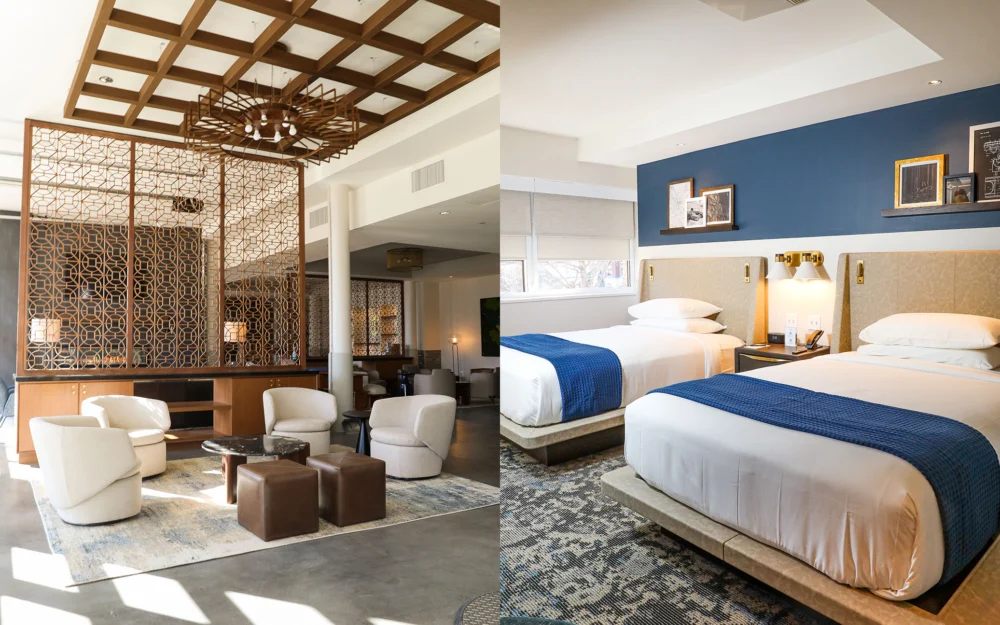
The redevelopment involved a complex architectural undertaking to connect three distinct buildings, creating a cohesive 60-room boutique experience. The design philosophy was centered on creating "Columbia’s living room," a space where locals and visitors could converge in a high-end, yet welcoming environment. The property features an upscale restaurant and a sophisticated bar, designed to compete with top-tier markets while maintaining the grit and character of the original fire station’s brickwork and structural integrity. This fusion of historic preservation and modern luxury provides the backdrop for a social mission that is equally ambitious.
The CarolinaLIFE Partnership and Educational Integration
At the heart of The Lantern’s operational model is a strategic partnership with the University of South Carolina (USC). Specifically, the hotel works in tandem with CarolinaLIFE, an individualized program designed for students with intellectual and developmental disabilities. Unlike traditional vocational programs, CarolinaLIFE offers a comprehensive collegiate experience. Students live on the USC campus, participate in academic instruction tailored to their specific interests, and engage in university life alongside their peers.
The partnership with The Lantern serves as a practical extension of the program’s career education and training component. Students in the program have the option to pursue part-time employment at the hotel, where they receive hands-on experience in a high-pressure, four-star environment. This is not a mandatory placement; rather, it is a career-pathway option for those interested in the hospitality industry.
The involvement of USC’s College of Hospitality, Retail, and Sport Management further elevates the partnership. By treating the hotel as a "teaching laboratory," the university ensures that the training provided meets rigorous industry standards. This academic oversight ensures that employees with disabilities are not merely filling roles but are developing transferable skills that will serve them throughout their professional lives.
The Vision of Rick Hayduk and The Raines Company
The conceptual framework for The Lantern was heavily influenced by the success of The Shepherd Hotel in Clemson, South Carolina. That project was the brainchild of Rick Hayduk, a veteran hospitality professional, and Dabo Swinney, the head football coach at Clemson University. Hayduk, who has two children with Down syndrome, sought to create a business model that proved inclusive hiring was not just a moral imperative but a sound business strategy.
After the success of the Clemson project, Hayduk joined the Raines Company, a developer based in Florence, South Carolina, with a portfolio of boutique and branded hotels across the Southeast. Hayduk brought the mission of inclusive hiring to the Raines Company, which has since committed to developing a series of hotels with similar mandates. The Lantern is a primary example of this expansion.
According to Erica Milliron, the Director of CarolinaLIFE, the mission was integrated into the hotel’s DNA long before the first guest checked in. Milliron, who joined USC in 2023, noted that discussions regarding the partnership began while the building was still an abandoned firehouse. The goal was to ensure that the inclusive hiring practices were not an afterthought but a foundational element of the hotel’s culture and operational structure.
Operational Excellence and Workforce Statistics
One of the most striking aspects of The Lantern’s launch was the overwhelming interest from the local community. When the hotel announced its initial 100 positions, it received approximately 1,800 applications. This high volume of interest allowed the management team to be highly selective, ensuring that the staff—regardless of disability status—met the high standards required for a boutique luxury property.
Currently, approximately 34% of The Lantern’s workforce identifies as having a disability. This figure is significantly higher than the industry average and demonstrates the scalability of inclusive hiring models. These employees are integrated into every department of the hotel, from the concierge desk and front-of-house operations to housekeeping and culinary services.
A key tenet of the program is "invisible inclusion." As Milliron pointed out, the goal is for guests to see employees as teammates of the organization rather than participants in a social program. Employees with disabilities are compensated at the same rates as their colleagues and held to the same performance standards. This approach minimizes the "othering" of individuals with disabilities and focuses on their contributions to the guest experience.
Broader Implications for South Carolina’s Economy
The significance of The Lantern’s hiring model is underscored by broader demographic data in South Carolina. Statistics indicate that approximately one in four residents in the state lives with a disability. Despite being a significant portion of the population, this demographic often faces higher rates of unemployment and underemployment compared to those without disabilities.
By demonstrating that a "top of market" four-star hotel can thrive with a neurodiverse workforce, The Lantern is providing a case study for other businesses in the region. The Raines Company has expressed plans to open three additional hotels with similar inclusive hiring goals, suggesting that this model is viewed as a sustainable and repeatable business strategy rather than a one-off charitable endeavor.
From an economic perspective, the integration of CarolinaLIFE alumni into the permanent workforce helps reduce the "brain drain" of specialized talent from the state. By providing clear career pathways within Columbia, the partnership ensures that the investment made in these students’ education translates into long-term economic contributions to the local community.
Chronology of Development
The path to The Lantern’s opening followed a deliberate timeline:
- Pre-2023: Conceptual meetings between the Raines Company and USC officials begin, inspired by the ClemsonLIFE and Shepherd Hotel model.
- 2023: Erica Milliron assumes the directorship of CarolinaLIFE and begins formalizing the partnership with the hotel project.
- November 2024: Construction officially breaks ground on the 1001 Senate Street site, involving the restoration of the historic fire station.
- Late 2025: Recruitment begins, drawing 1,800 applicants for 100 roles.
- Early 2026: The Lantern Hotel officially opens to the public, achieving a workforce composition where over one-third of employees have a disability.
Industry Analysis: The Future of Inclusive Hospitality
The hospitality industry is currently navigating a period of significant change, with a heightened focus on Diversity, Equity, and Inclusion (DEI) and a persistent need for reliable labor. The Lantern’s model addresses both of these challenges simultaneously.
Industry analysts suggest that inclusive hiring can lead to higher employee retention rates and improved morale across the entire staff. In a sector often plagued by high turnover, the loyalty and commitment shown by employees who have been traditionally overlooked by the workforce can provide a stabilizing effect on operations. Furthermore, the "socially conscious traveler" represents a growing market segment. Modern consumers are increasingly choosing to spend their money with brands that demonstrate a commitment to social impact, giving The Lantern a competitive edge in the crowded boutique hotel market.
However, the success of such a model requires more than just a willingness to hire; it requires the structural support of institutions like USC. The CarolinaLIFE program provides the necessary scaffolding—training, independent living skills, and ongoing support—that allows these individuals to thrive in a professional setting. This symbiotic relationship between private enterprise and higher education may serve as the blueprint for future developments across the United States.
Conclusion
The Lantern Hotel stands as a testament to the idea that luxury and social responsibility are not mutually exclusive. By transforming a piece of Columbia’s architectural history into a hub for inclusive employment, the Raines Company and the University of South Carolina have created something that transcends the typical hotel experience.
As the hospitality industry continues to evolve, the eyes of developers and educators alike will likely remain on Senate Street. The Lantern has proven that when barriers to entry are removed, and the right support systems are put in place, the result is a workforce that is not only diverse but exceptionally capable of delivering world-class service. For the city of Columbia, the hotel is more than just a place to stay; it is a "living room" that truly reflects the diversity and potential of its entire community.