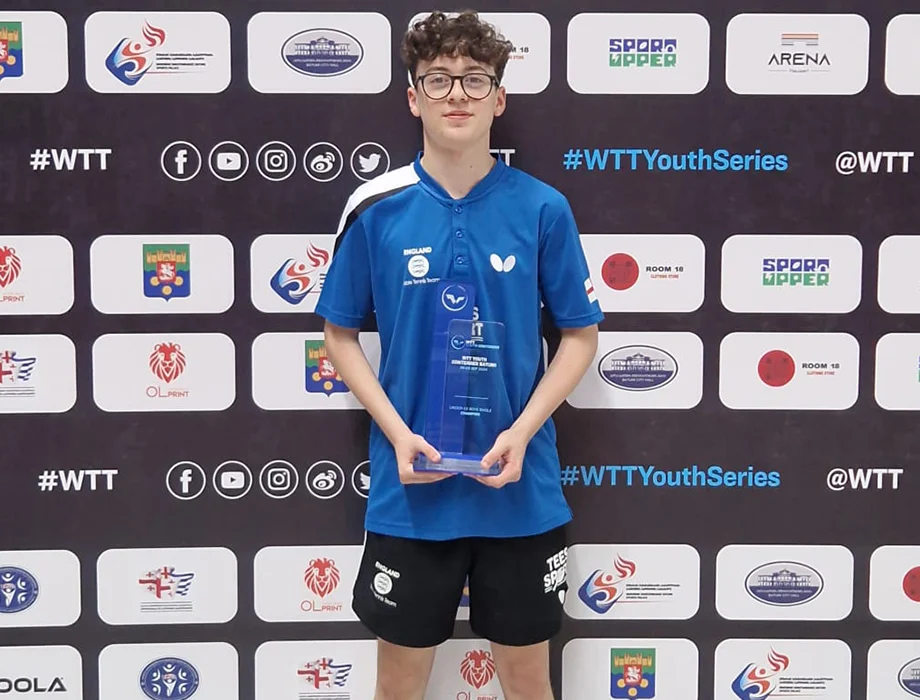
England’s Junior Boys national table tennis team has secured a momentous promotion to the elite Tier A for the 2025/26 season, a significant achievement underscored by a dominant performance in the final group stages and a decisive positional play-off match against Bulgaria at the World Table Tennis (WTT) Youth Contender Batumi. This promotion marks a substantial leap for the young English squad, signaling their emergence as a force to be reckoned with on the international junior circuit.
A Campaign of Resilience and Determination
The Junior Boys’ journey to Tier A was a testament to their consistent high-level performance and their ability to navigate the complex tournament structure. The campaign commenced with a strong showing in the initial group stage, where England showcased their prowess by securing victories against formidable opponents Serbia and Montenegro. This early success positioned them favorably, leading to a crucial play-off match. The objective of this play-off was to determine seeding for the higher tiers, with the winner earning the opportunity to compete for positions within the top 16 globally.
However, the path to the very top tiers in junior table tennis is exceptionally challenging. Teams starting in Tier B often face a steep uphill battle to contend for medal positions or even top 16 rankings. This is primarily due to the tournament’s format, which can pit a Tier B qualifier against a top-seeded team from Tier A in a single, high-stakes match for advancement. In their initial play-off, England encountered such a scenario, facing a formidable Swedish team. Despite their best efforts, the English squad was unable to overcome the Swedish challenge, ultimately falling 3-0 in a match that highlighted the caliber of competition at the higher levels.
Overcoming Adversity and Securing Promotion
Undeterred by the setback, the England Junior Boys team demonstrated remarkable resilience by regrouping and entering Group K. This phase of the competition proved to be a turning point, as the team delivered exceptional performances, securing victories against strong contenders Turkey and Luxembourg. These wins were instrumental in setting up a pivotal rematch against Serbia. England had previously edged out Serbia 3-2 in their opening group fixture, making this second encounter even more significant for determining their final standing.
The match against Serbia for positions 17-20 was more than just a contest for a higher ranking; it was a direct pathway to promotion to Tier A. Finishing within this range was not only the highest possible placement within Tier B but also guaranteed their coveted spot in the elite tier for the subsequent season. The pressure was palpable, but the England team rose to the occasion, defeating Serbia 3-1. This victory propelled them into the decisive 17th-place play-off, where they would face Bulgaria.
The Decisive Encounter: England vs. Bulgaria
The match against Bulgaria was the culmination of their season-long efforts, a true test of their mettle and a direct battle for promotion. The tension was high as the opening singles match saw Connor Green take to the table against Stefan Dimitrov. Green delivered a crucial performance, securing a hard-fought 3-2 victory that set a positive tone for England.
The momentum appeared to be shifting in England’s favor as Jakub Piwowar faced Yoan Velichkov in the second singles match. Piwowar held a commanding 2-1 lead, suggesting a swift 2-0 lead for England. However, Velichkov displayed great tenacity, fighting back to level the match, demonstrating the competitive spirit of the Bulgarian team and the unpredictable nature of junior table tennis.
In a match where every point was critical, Max Radiven stepped up to the table. Radiven, who had maintained an impeccable 100% win rate throughout the tournament, once again proved to be a vital asset for the English squad. He secured a crucial victory, putting England ahead 2-1 in the tie. This victory not only showcased Radiven’s individual brilliance but also underscored his immense value to the team’s success.
The final match saw Connor Green return to the table for his final outing with the England Junior Boys team at the European Youth Championships (EYC). In a fitting send-off, Green delivered a stellar performance, defeating his Bulgarian opponent 3-1. This decisive victory sealed the 3-1 win for England in the tie against Bulgaria, confirming their promotion to Tier A. Green’s performance, both in this match and throughout his tenure with the Junior Boys, was a significant contribution to the team’s enduring success.
Context and Significance of Tier A Promotion
The World Table Tennis (WTT) Youth Contender series serves as a critical platform for young table tennis players to gain international experience, hone their skills, and compete against the best talent from around the globe. The promotion to Tier A signifies that England’s Junior Boys will now regularly compete against the top-ranked junior nations in the world. This includes powerhouse nations like China, Japan, South Korea, Germany, and France, who consistently produce world-class junior athletes.
For England, this promotion is more than just a ranking upgrade; it represents a significant step forward in the development of their junior program. Competing at the Tier A level will expose the players to a higher intensity of play, more sophisticated tactics, and greater pressure, all of which are invaluable for their long-term development as professional athletes. It also provides greater visibility and opportunities for these young talents, potentially leading to further sponsorship, selection for elite training camps, and ultimately, pathways into senior international competition.
The structure of the WTT Youth Contender events, with its tiered system, is designed to create competitive balance and provide clear pathways for progression. While Tier B offers a crucial starting point, the ultimate goal for aspiring national teams is to ascend to Tier A, where the most prestigious accolades and developmental opportunities reside. England’s successful ascent demonstrates a robust talent pipeline and effective coaching and development strategies within the English table tennis system.
Supporting Data and Performance Metrics
While specific detailed statistics for each match are not provided in the initial report, the narrative highlights key performance indicators. Max Radiven’s "100% win rate" is a significant statistical achievement, indicating exceptional consistency and a clutch mentality. Connor Green’s pivotal wins in both his singles matches against Bulgaria, particularly his final match to clinch promotion, demonstrate leadership and strong performance under pressure. The team’s overall group stage victories against Serbia and Montenegro, followed by wins against Turkey and Luxembourg, point to a consistent ability to perform against a range of competitive European nations. The 3-1 scorelines in key play-off matches against Serbia and Bulgaria suggest a strong collective effort and the ability to close out matches effectively.
Future Implications and Outlook
The promotion to Tier A opens a new chapter for England’s Junior Boys. The team will now have the opportunity to test themselves against the absolute elite of junior table tennis on a more regular basis. This increased exposure is crucial for identifying areas of strength and weakness, refining strategies, and building the mental fortitude required for top-level competition.
Furthermore, this success can serve as a significant motivator for younger players within the English table tennis system, inspiring them to strive for similar achievements. The visibility gained from competing at the highest level can also attract greater investment and support for junior development programs across the country.
The WTT Youth Contender Batumi has undoubtedly been a landmark event for England’s Junior Boys. Their journey from a strong Tier B performance to a decisive promotion signifies a maturing program and a bright future for English junior table tennis on the international stage. The focus will now shift to preparing for the challenges and opportunities that await them in Tier A during the 2025/26 season, where they will aim to not only compete but to make a lasting impact.