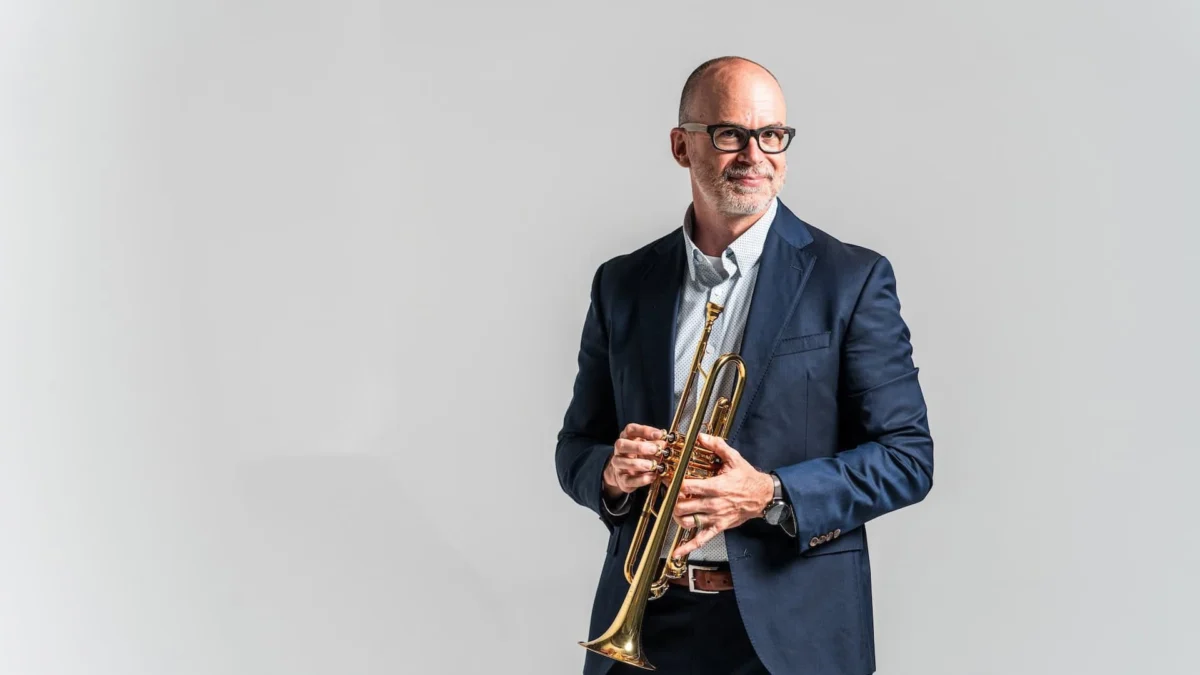
The central thesis of Killion’s research, which has been presented at prestigious institutions such as The Juilliard School and the Royal Academy of Music, revolves around the distinction between "quantity-based repetition" and "strategic variability." The study reveals that while repetition is a necessary component of motor learning, the manner in which experts repeat a passage differs fundamentally from the habits of students. Experts do not merely repeat; they iterate, analyze, and modify their approach with every successive attempt, a process known in cognitive psychology as deliberate practice.
The Profile of Micah Killion and the Evolution of Expert Practice
Micah Killion’s insights are grounded in a career that bridges the gap between elite performance and academic research. As a former principal trumpet of the United States Air Force Band in Washington, D.C., and a Yamaha Performing Artist, Killion has operated at the highest echelons of professional music. His educational background, comprising degrees from Juilliard, Teachers College at Columbia University, and the University of Texas at Austin, provides a dual perspective on the physical demands of brass performance and the psychological underpinnings of learning.
Killion’s research emerges at a time when music pedagogy is shifting away from the traditional "10,000 hours" myth—a concept popularized by Malcolm Gladwell that emphasized total volume of practice—toward a more nuanced understanding of efficiency. In the professional world, where time is a finite resource and physical fatigue (particularly for brass players) is a limiting factor, the ability to solve complex technical problems quickly is a prerequisite for success. Killion’s work identifies that the "one thing" artist-level musicians do differently is the immediate and surgical application of error-correction strategies rather than the generalized repetition of a passage.
The Mechanics of Strategic Repetition and Error Correction
The primary finding of recent studies on expert practice highlights a phenomenon called "metacognitive monitoring." When a novice encounters a difficult passage, their typical response is to play the entire phrase again, hoping the error will resolve itself through muscle memory. In contrast, an artist-level musician stops the moment an error occurs. They isolate the specific interval, rhythmic grouping, or articulatory transition that caused the failure and apply a variety of "pressure tests" to ensure the fix is robust.
Data from observational studies of expert practice routines suggest several key behaviors:
- Isolation of the Problem: Experts rarely repeat a whole page; they may repeat a single two-note transition twenty times, changing only one variable (such as air speed or finger pressure) each time.
- Variable Practice: Instead of playing a passage the same way every time, experts intentionally vary the tempo, dynamics, or rhythm. This forces the brain to build a more flexible and resilient "schema" for the music, rather than a rigid, fragile motor program.
- Mental Modeling: Before the physical act of playing, experts engage in "auditory imagery." They have a crystal-clear mental representation of how the passage should sound, which serves as a benchmark for their actual performance.
This shift from "doing" to "problem-solving" reduces the time required to master a passage and significantly increases the retention of that mastery. Killion’s research suggests that the frustration often felt by students—the feeling of "losing" progress between practice sessions—is a direct result of practicing for "fluency" rather than "accuracy."
Supporting Data: The Neuroscience of Deliberate Practice
The efficacy of the methods described by Killion is supported by neuroscientific data regarding myelin and neuroplasticity. Myelin is the insulating layer, or sheath, that forms around nerves, including those in the brain and spinal cord. It allows electrical impulses to transmit quickly and efficiently along the nerve cells. In the context of music, "correct" practice builds stronger, more efficient neural pathways.
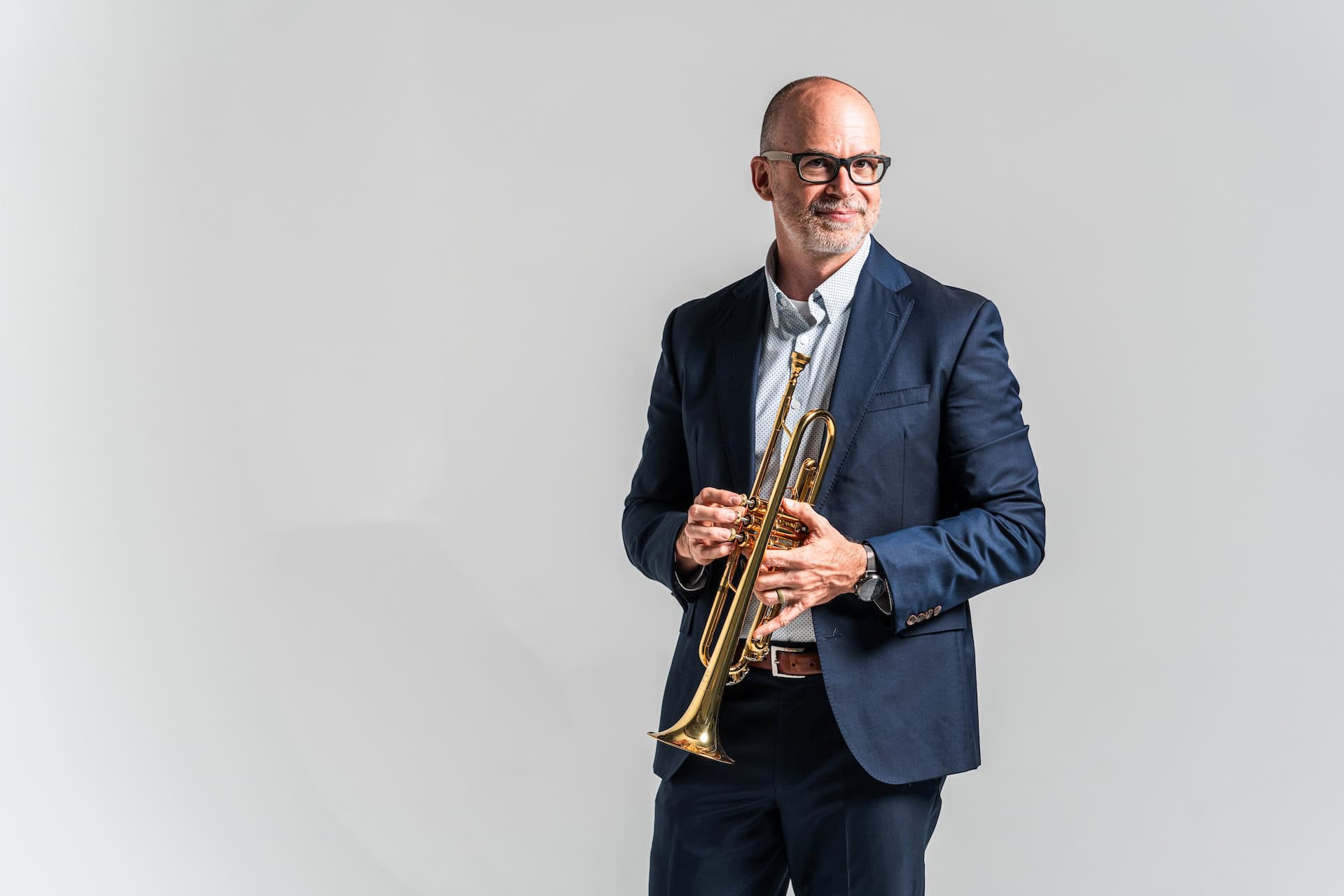
When a musician repeats a passage with errors, they are effectively "wiring" those errors into their neural circuitry. The "one thing" experts do differently is ensuring that they only reinforce the desired outcome. According to data published in the Journal of Research in Music Education, experts spend a significantly higher percentage of their practice time in "active correction" modes compared to "play-through" modes. The study observed that while novices might play a piece from start to finish multiple times, experts might spend 90% of their time on 10% of the music, focusing exclusively on the "nodes" of highest difficulty.
Implications for Music Education and Professional Training
The findings presented by Micah Killion have profound implications for how music is taught in conservatories and universities. Historically, music education has relied heavily on an apprenticeship model where students mimic the teacher. However, Killion’s research advocates for a "coaching" model that teaches students how to practice, rather than just what to play.
At Montclair State University and during his guest lectures at institutions like Eastman, Killion emphasizes that the goal of a teacher is to make themselves obsolete by providing the student with a toolkit of diagnostic strategies. This involves:
- Teaching Self-Regulation: Encouraging students to record their practice sessions and objectively analyze their errors.
- Implementing Interleaved Practice: Rather than "blocking" practice (spending an hour on one piece), research suggests that switching between different tasks every 15–20 minutes leads to better long-term retention.
- Cognitive Load Management: Understanding that the brain can only process a certain amount of new information at once. Experts manage this by slowing down the tempo to a point where the cognitive load is manageable, then gradually increasing it.
Industry Reaction and Broader Impact
The music industry, particularly the orchestral sector, has reacted with interest to Killion’s research. In an era where orchestral auditions are more competitive than ever, the ability to prepare a massive amount of repertoire to a flawless standard is essential. Principal players from major orchestras have noted that the "expert" habits identified in Killion’s study are exactly what they look for when evaluating the "musical intelligence" of a candidate.
Furthermore, these findings extend beyond music. The principles of deliberate practice and strategic variability are being applied in sports, surgery, and high-stakes aviation. The realization that repetition without variation is a "plateau-inducer" is a universal truth in skill acquisition. By highlighting the specific behaviors of artist-level musicians, Killion provides a roadmap for anyone seeking to move from competence to excellence.
Conclusion: The Path to Mastery
The work of Micah Killion serves as a critical reminder that in the pursuit of artistic excellence, the quality of engagement far outweighs the quantity of time spent. The "one thing" that artist-level musicians do differently is not a secret technique or an innate talent; it is a disciplined, analytical approach to the practice room. By treating every repetition as a scientific experiment rather than a ritualistic chore, these performers are able to transcend the limitations of traditional practice and reach new heights of musical expression.
As Killion continues his work at Montclair State and on the international stage, the focus remains on demystifying the process of greatness. For the aspiring musician, the message is clear: stop repeating, start solving. The transition from a student to an artist begins the moment the musician stops hoping for improvement and starts engineering it through strategic, deliberate action.