China is meticulously cultivating a robust foundation for its national football aspirations through an extensive and deeply rooted grassroots development program, a long-term strategy underscored by the unwavering dedication of veteran coaches and recent international recognition. This commitment to nurturing young talent from the earliest ages, even as the senior national team faces ongoing challenges in global competitions, reflects a profound belief that sustained success can only spring from a nationwide culture of football, built from the ground up.
The Visionaries: Individual Dedication Fuels a National Dream
At the heart of this generational endeavor are individuals like Gao Yuan, a figure whose 28 years of grassroots coaching experience have positioned him as a living testament to the enduring faith required for such a monumental undertaking. Currently serving as the director of the soccer education and research department at Capital University of Physical Education and Sports in Beijing, Gao speaks with the conviction of someone who has witnessed the landscape transform from barren to budding. "The starting point of the country’s soccer landscape was like a desert, and for decades we have been sowing the seeds for the future," Gao reflects, his words echoing the sentiment of countless others who have toiled in relative obscurity. He remains steadfast in his belief that these seeds are now demonstrably sprouting, regardless of the Chinese senior side’s recent World Cup qualification setbacks. "If everyone can truly work for the good of the future generations, excellent Chinese soccer players will emerge. I’m not bragging. It will take time and I always have faith." This perspective is crucial, highlighting that the current focus is not on immediate results for the national team but on establishing a self-sustaining ecosystem for talent development that will bear fruit decades down the line. His role at a prominent sports university further signifies the academic and scientific backing now being integrated into China’s football development strategy, ensuring that coaching methodologies are not only passionate but also pedagogically sound and research-driven.
A thousand kilometers southwest, in Xi’an, Shaanxi province, another dedicated individual, Wang Liangchao, embodies the spirit of community-driven football development. For over two decades, Wang has been running a free soccer clinic for local children, an initiative he passionately refers to as "the light of hope" for the country’s football future. Since its inception in 1996, the clinic has welcomed children aged 4 to 13 on weekends and during school vacations, providing expert coaching without the financial barrier of tuition fees – participants only need their boots and uniform. Wang, who began his coaching career at Northwest University of Political Science and Law in 1991, articulated his founding philosophy: "The original purpose of starting a free soccer clinic was to attract more children to the game. This is just like a hope project in soccer. I want to start a process, which can be easily copied and spread by other coaches, to promote soccer among the younger generations." His youngest student, a mere four years old, underscores the clinic’s commitment to introducing football at the earliest possible age, fostering a love for the sport before competitive pressures can deter nascent interest. Wang’s model, predicated on accessibility and community engagement, serves as a blueprint for localized, sustainable grassroots programs, demonstrating that impactful change can originate from passionate individuals, irrespective of large-scale government directives.
The National Imperative: China’s Strategic Football Reform
These individual efforts are not isolated incidents but are part of a much larger, government-backed strategic imperative to transform China into a global football powerhouse. The national ambition, formally articulated in the "Overall Plan for Chinese Football Reform and Development" released in 2015, sets an audacious goal: to become a top-tier football nation by 2050. This comprehensive blueprint outlines a multi-stage approach, with a significant emphasis on grassroots development as the cornerstone.
Historically, Chinese football faced a myriad of challenges, including a relatively narrow player base, a lack of systematic youth training, and insufficient infrastructure. The analogy of a "desert" for the starting point of the country’s football landscape, as described by Gao Yuan, accurately reflects a period where talent identification was sporadic and professional pathways were underdeveloped. The 2015 reform plan sought to fundamentally alter this trajectory by integrating football into the national education system, a pivotal shift designed to broaden participation exponentially and ensure that football development is not an extracurricular luxury but a fundamental component of youth education.
Strategic Investment and Infrastructure for Future Success
The implementation of the 2015 plan has led to unprecedented levels of investment in football infrastructure and human capital development. A key objective has been to dramatically increase the number of specialized football schools and facilities across the country. By 2020, China aimed to have over 20,000 schools with specialized football programs, a number projected to grow to 50,000 by 2025, engaging an estimated 50 million students in regular football activities. This ambitious target involves not only building new pitches and training centers but also upgrading existing facilities in schools and communities, ensuring that children, regardless of their socio-economic background or geographical location, have access to adequate spaces to play and train.
Central to this massive expansion is the development of a highly skilled coaching workforce. The Chinese Football Association (CFA) has initiated extensive training programs to professionalize grassroots coaching. The original article notes over 260 training courses involving around 17,000 participants nationwide. These programs focus on modern coaching methodologies, child psychology in sports, injury prevention, and long-term player development. The goal is to move beyond traditional, results-oriented coaching to a more holistic approach that prioritizes skill development, tactical understanding, and fostering a lifelong love for the game. Coaches are trained to identify talent, but more importantly, to create an inclusive and enjoyable environment that encourages broad participation and retention. The Capital University of Physical Education and Sports, where Gao Yuan works, plays a critical role in developing these educational frameworks and training the next generation of football educators and coaches.
International Acclaim and Recognition
The sustained efforts and systematic approach to grassroots football have not gone unnoticed on the international stage. Last month, the Chinese Football Association (CFA) was honored with the prestigious Asian Football Confederation’s (AFC) President Recognition Award for Grassroots Football at the AFC’s annual gala in Thailand. This award is a significant testament to the progress China has made in prioritizing and implementing effective grassroots development programs. Notably, this was not the first time the CFA received such recognition; they also won the award in 2013, highlighting a consistent and sustained commitment over the past decade.
The AFC award specifically acknowledges the "special attention China has paid to technical programs recently," referencing the extensive training courses and participant numbers. An official statement from the AFC regarding the award would likely commend China’s comprehensive strategy, which includes integrating football into the education system, developing coaching expertise, and expanding infrastructure. It signifies that China’s top-down policy directives are translating into tangible, impactful programs on the ground, setting a benchmark for other nations in the region.
From the CFA’s perspective, receiving this award provides external validation for their strategic direction and motivates further investment and effort. A hypothetical statement from a CFA representative might express pride in the collective efforts of coaches, educators, and volunteers, reaffirming their commitment to deepening and expanding these programs. Such recognition reinforces the belief that while senior national team success may be elusive in the short term, the fundamental work being done at the grassroots level is positioning China for a more prominent role in global football in the decades to come.
Challenges and the Long Road Ahead
Despite the significant strides and international recognition, the path to becoming a football powerhouse is fraught with challenges, requiring immense patience and sustained effort. One primary challenge lies in ensuring the consistent quality of coaching and facilities across such a vast and diverse nation. While urban centers may benefit from advanced resources, rural areas still require substantial investment and support to achieve equitable access and quality. The rapid expansion also necessitates robust quality control mechanisms to ensure that the sheer volume of participants does not dilute the quality of training and development.
Another critical aspect is the player pathway. While grassroots programs successfully introduce children to the sport, the transition from school-level football to professional academies and ultimately to the senior national team requires a seamless and meritocratic system. This involves sophisticated talent identification, specialized training programs for elite youth, and mechanisms to prevent early burnout or loss of interest among promising young players. The long-term retention of talented athletes, especially as they face academic pressures or competition from other sports, remains a key focus.
Furthermore, the sustainability of these programs, particularly those relying on volunteer efforts like Wang Liangchao’s clinic, is crucial. Government funding, corporate sponsorships, and community engagement models must be robust and diversified to ensure these initiatives can continue to thrive and expand without interruption. The "hope project" concept, while inspiring, needs structural support to be truly replicable on a national scale.
Broader Societal Impact and a Cultural Shift
Beyond the immediate goal of producing elite footballers, China’s grassroots football revolution is having a profound broader societal impact. Integrating football into the national curriculum promotes physical health and active lifestyles among children, combating rising rates of childhood obesity and sedentary behavior. The sport also serves as a powerful vehicle for teaching essential life skills such as teamwork, discipline, leadership, resilience in the face of defeat, and respect for rules and opponents. These values are crucial for holistic youth development, contributing to the creation of well-rounded individuals who can contribute positively to society, irrespective of their footballing prowess.
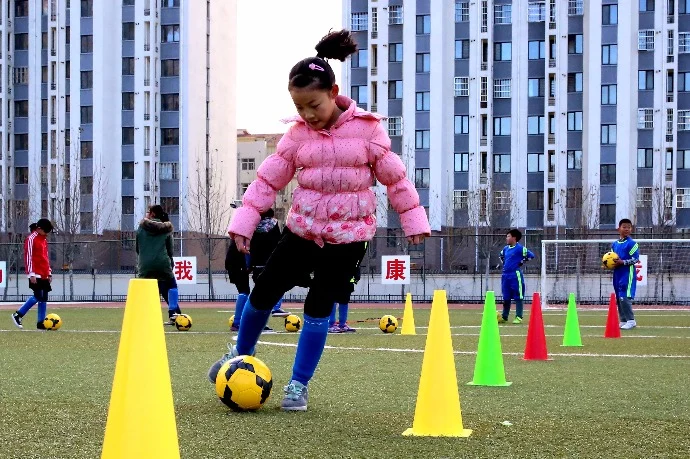
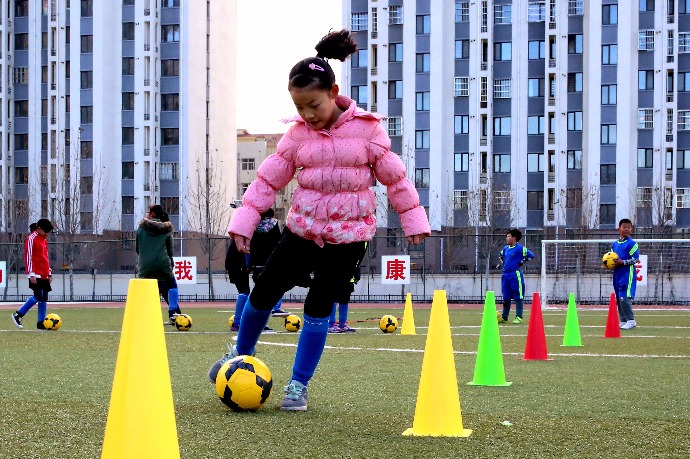
Culturally, football is becoming increasingly ingrained in the fabric of Chinese society. Once a sport with a limited following compared to other disciplines, it is now gaining unprecedented popularity among children and families. The sight of kindergarteners in Tonglu county, Zhejiang province, enjoying their first soccer lesson under professional guidance, as depicted in the accompanying image, is a powerful symbol of this cultural shift. It reflects a growing appreciation for the beautiful game, not just as a spectacle, but as an active pursuit that fosters community bonds and national pride.
Conclusion
China’s grassroots football movement represents a long-term, strategic investment in the nation’s future, driven by both top-down policy and bottom-up passion. While the journey to becoming a footballing superpower is arduous and demands unwavering patience, the systematic development of infrastructure, the professionalization of coaching, and the broad integration of football into youth education are laying solid foundations. The unwavering faith of veterans like Gao Yuan, the community-driven initiatives of individuals like Wang Liangchao, and the consistent international recognition from bodies like the AFC collectively paint a picture of a nation steadily, painstakingly, and passionately sowing the seeds for a generation of future champions. The desert, as Gao Yuan once described it, is slowly but surely transforming into a vibrant green landscape, promising a harvest of footballing talent that will define China’s place in the global game for decades to come.